
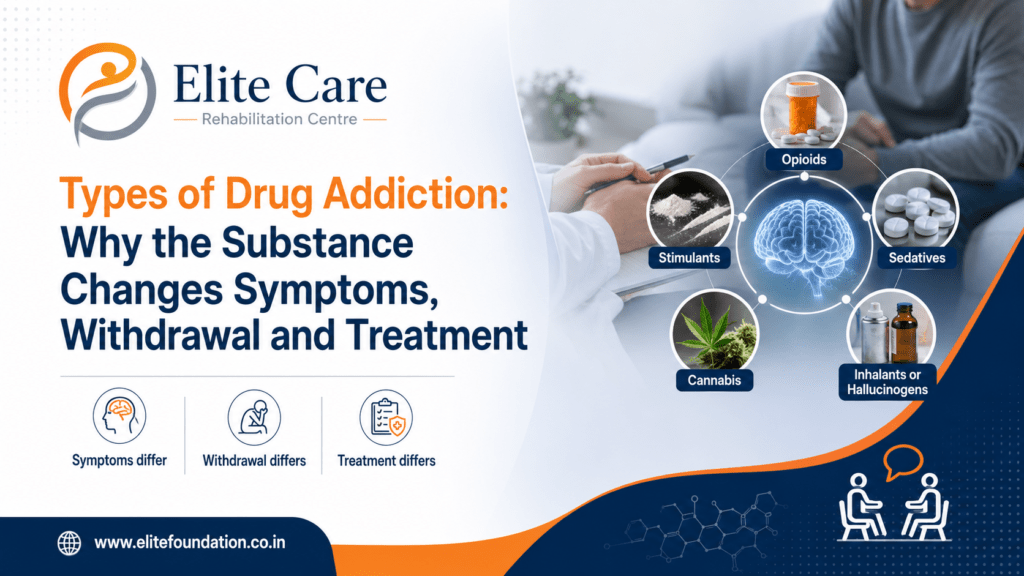
Types of drug addiction matter because heroin, cocaine, methamphetamine, cannabis, sleeping pills and inhalants affect the brain and body in different ways. Families searching for a drug rehabilitation centre in Mumbai may see the same outward problems—secrecy, missing money, poor sleep or sudden behaviour change—but the medical risks can differ sharply. The substance, dose, route, duration and use of more than one drug influence symptoms, overdose risk, withdrawal and treatment. Safe care begins with assessment, not a standard detox package, and connects stabilisation with counselling, psychiatric care, family work and relapse prevention.
One person may become unusually sleepy and difficult to wake. Another may remain awake for several nights, become suspicious and speak rapidly. Someone else may appear calm but experience seizures after suddenly stopping a sedative medicine.
These differences are not minor. They affect whether the person requires emergency care, supervised withdrawal, psychiatric assessment, medication, residential rehabilitation or structured outpatient support.
What do the different types of drug addiction mean?
The phrase different types of drug addiction usually refers to the substance or drug class involved. Clinicians more often diagnose a substance use disorder and identify whether it involves opioids, stimulants, sedatives, cannabis, inhalants, hallucinogens or several substances together.
The diagnosis is not based only on whether a drug is illegal. Prescription medicines can also cause dependence, impaired control and serious harm when they are misused. At the same time, physical dependence after prescribed treatment is not automatically the same as addiction.
Addiction generally involves a pattern such as:
- Difficulty controlling how much or how often the drug is used
- Repeated unsuccessful attempts to reduce or stop
- Strong cravings
- Increasing time spent obtaining, using or recovering from the substance
- Continued use despite medical, emotional, family, financial or legal harm
- Neglect of work, education or responsibilities
- Use in dangerous situations
- Tolerance, withdrawal or both
Not every patient shows every feature. A proper assessment examines the wider pattern instead of relying on one symptom or one family argument.
Why the substance changes the medical picture
Different drugs act on different brain systems. Some slow breathing and awareness. Others increase alertness, pulse and body temperature. Some primarily alter perception, memory or judgement.
The clinical picture is also affected by:
- The strength and purity of the substance
- How it was taken
- How frequently it was used
- The time since the last dose
- Previous withdrawal or overdose
- Other drugs, alcohol or medicines used at the same time
- Age, pregnancy and physical health
- Depression, psychosis, trauma or other mental-health conditions
This is why the same programme cannot be copied for every admission. Drug withdrawal symptoms, overdose risk and suitable treatment differ substantially across drug classes.
How drug addiction affects the brain
Psychoactive drugs can alter reward, motivation, stress, memory, sleep, judgement and impulse control. Repeated exposure may teach the brain to connect the substance with relief, energy, confidence, sleep or escape from distress.
Over time, the person may use the drug less for pleasure and more to avoid withdrawal, low mood, anxiety or exhaustion. Everyday rewards can begin to feel less important than the substance.
This helps explain why promises and punishments alone often fail. The person may genuinely want to stop while still experiencing powerful cravings, impaired control and a learned response to triggers.
The NIDA guidance on addiction treatment and recovery explains that effective care commonly combines behavioural treatment, medical care and continuing support rather than relying on detoxification alone.
Common signs of drug addiction
The signs of drug addiction can overlap across substances, even though the immediate effects differ.
Families may notice:
- Unexplained changes in sleep
- Sudden changes in appetite or weight
- Missing money, medicines or valuables
- Secrecy about friends, travel or spending
- Declining work or academic performance
- Repeated absence or lateness
- Neglect of personal care
- Mood swings, irritability or unusual anxiety
- Periods of extreme energy or unexplained drowsiness
- Risky driving or accidents
- Repeated borrowing or financial pressure
- Using drugs alone or in dangerous settings
- Continuing despite medical or family consequences
These changes do not prove which substance is involved. Drug addiction symptoms need to be considered with physical signs, the person’s account, medicine history, packaging where safely available and clinical examination.
Common types of drug addiction
The following categories are clinically useful because each can produce a different pattern of intoxication, withdrawal, overdose and treatment need.
Opioid addiction
Opioids include heroin, opium, certain prescription pain medicines and highly potent synthetic opioids. They can reduce pain and produce relaxation or euphoria, but they can also suppress breathing.
Common opioid addiction symptoms
Possible opioid addiction symptoms include:
- Unusual sleepiness or repeatedly “nodding off”
- Small pupils
- Slowed speech and movement
- Constipation
- Repeated unexplained pain complaints or requests for medicines
- Withdrawal when a dose is delayed
- Increasing amounts needed for the same effect
- Needle marks, skin infections or damaged veins when drugs are injected
- Periods of absence followed by marked sedation
- Continued use despite overdose or serious harm
Opioid overdose may cause very slow or absent breathing, inability to wake, choking or gurgling sounds, and blue or grey lips or fingertips. This is an emergency. Call 112 in India immediately.
Opioid withdrawal
Opioid withdrawal can cause:
- Restlessness and anxiety
- Muscle and bone pain
- Sweating and a runny nose
- Yawning
- Abdominal cramps
- Vomiting or diarrhoea
- Dilated pupils
- Insomnia
- Strong cravings
Opioid withdrawal is often intensely distressing. It does not usually produce the same seizure or delirium risk as abrupt withdrawal from certain sedatives, but dehydration, pregnancy, serious physical illness, severe psychological distress and rapid return to opioid use can create substantial danger.
Tolerance can fall after detox or a period of abstinence. Returning to a previously used amount may then cause a fatal overdose.
Treatment for opioid use disorder
Treatment for opioid use disorder should include assessment for evidence-based medication alongside counselling, overdose-prevention planning and continuing follow-up. The appropriate treatment should reflect the patient’s clinical needs, other substance use, informed preferences and individual circumstances. A decision not to participate in counselling should not automatically delay evidence-based medication for opioid use disorder.
Withdrawal management alone is not considered adequate treatment because cravings, reduced tolerance and overdose risk remain after detoxification. The CDC guidance on opioid use disorder treatment recommends offering or arranging evidence-based medication treatment, particularly for moderate or severe opioid use disorder.
Stimulant addiction
Stimulants include cocaine, methamphetamine and certain prescription medicines used for attention disorders or conditions involving excessive daytime sleepiness. They increase activity in brain systems involved in alertness and reward.
Common stimulant addiction symptoms
Possible stimulant addiction symptoms include:
- Unusually high energy
- Rapid or excessive speech
- Very little sleep
- Reduced appetite and weight loss
- A fast pulse or raised blood pressure
- Jaw clenching or repetitive movements
- Agitation or aggression
- Suspiciousness or paranoia
- Hallucinations
- Repeated spending or disappearing for long periods
- A severe “crash” after use
Chest pain, collapse, seizures, very high temperature, severe agitation or sudden weakness on one side of the body require emergency assessment.
Stimulant withdrawal
After stimulant use stops, a person may experience:
- Profound tiredness
- Long periods of sleep or disrupted sleep
- Increased appetite
- Low mood
- Anxiety or irritability
- Reduced motivation
- Difficulty concentrating
- Strong cravings
- Suicidal thoughts in severe cases
The absence of shaking or vomiting does not make stimulant withdrawal unimportant. Depression, impulsivity, psychosis and suicide risk may require close psychiatric review.
Treatment for stimulant addiction
Treatment may include behavioural therapies, structured routines, sleep restoration, craving management, psychiatric care and contingency management—a structured approach that uses agreed incentives to reinforce treatment attendance or drug-free behaviour.
Physical complications, severe weight loss, dental problems, infections and heart symptoms may also need attention.
Sedative, sleeping-pill and tranquilliser addiction
This group includes benzodiazepines, barbiturates and other medicines that slow brain activity. They may be prescribed for anxiety, seizures or sleep, but misuse can lead to dependence, memory problems and overdose.
Possible signs include:
- Excessive drowsiness
- Slurred speech
- Poor balance or repeated falls
- Memory gaps
- Confusion
- Taking more tablets than prescribed
- Obtaining prescriptions from several sources
- Combining tablets with alcohol, opioids or other sedatives
- Anxiety or shaking when a dose is delayed
Benzodiazepine withdrawal symptoms
Benzodiazepine withdrawal symptoms can include:
- Severe anxiety or panic
- Tremor
- Insomnia
- Sweating
- Nausea
- Sensitivity to light or sound
- Agitation
- Confusion
- Hallucinations
- Seizures
- Delirium
Suddenly stopping sedatives after regular or heavy use can be life-threatening. A medically planned reduction and monitoring process may be required. Families should not create a taper schedule or substitute one tablet for another without a qualified prescriber.
Cannabis addiction
Cannabis is sometimes described as harmless because it does not usually produce the same fatal breathing suppression seen with opioids. It can still cause dependence, impaired judgement and significant psychological or social harm.
Possible cannabis addiction symptoms include:
- Using more often or for longer than intended
- Difficulty reducing use
- Poor concentration or short-term memory
- Reduced motivation
- Anxiety or panic
- Suspiciousness
- Declining academic or work performance
- Driving while impaired
- Continued use despite family or mental-health problems
These signs are not specific to cannabis, and reduced motivation alone does not establish a cannabis use disorder. Diagnosis depends on impaired control, functional harm and the wider pattern of use.
Cannabis withdrawal symptoms
Cannabis withdrawal symptoms may include irritability, anxiety, disturbed sleep, vivid dreams, reduced appetite, restlessness, low mood and cravings.
The withdrawal is not usually medically dangerous in the same way as sedative withdrawal, but it can be distressing and can quickly lead to renewed use. Severe anxiety, psychosis, suicidal thoughts or inability to function require clinical assessment.
Treatment may include motivational work, behavioural therapy, family involvement, sleep support and care for co-occurring anxiety, depression or psychosis.
Hallucinogens and dissociative drugs
Classic hallucinogens can alter perception, time, mood and the sense of reality. Dissociative drugs can create a feeling of separation from the body or surroundings.
Possible acute effects include:
- Visual or sensory distortions
- Panic
- Confusion
- Unsafe behaviour
- Paranoia
- Raised pulse or blood pressure
- Accidents caused by impaired judgement
Classic hallucinogens do not usually produce a typical physical withdrawal syndrome. That does not mean their use is risk-free. Persistent perceptual problems, psychosis, panic and dangerous behaviour may require psychiatric or emergency care.
Some dissociative drugs can produce compulsive use, tolerance and significant physical complications. Repeated ketamine use, for example, may be associated with bladder and urinary-tract problems, abdominal symptoms, memory difficulties and compulsive use. The specific risks depend on the dissociative drug involved.
Treatment focuses on the actual substance, mental state, medical complications and the pattern of repeated use.
Inhalant addiction
Inhalants include volatile chemicals found in products such as glue, thinner, fuel, correction fluid and aerosol products. Use may be overlooked because the substance is inexpensive and easily available.
Possible signs include:
- A chemical smell on the breath or clothes
- Paint or stains around the face or hands
- Dizziness
- Slurred speech
- Poor coordination
- Headache
- Confusion
- Unusual containers or soaked cloths
- Damage to school, work or family functioning
Inhalants can cause fatal heart-rhythm disturbances, suffocation, seizures and injury to the brain, liver, kidneys or nerves. A long history of use is not required for a medical emergency to occur.
Withdrawal and recovery needs vary by chemical. Medical assessment, neurological review, psychological treatment and protection from easy access may all be necessary.
Prescription medicine misuse and addiction
Prescription medicine addiction is not a separate pharmacological category. It may involve opioid pain medicines, sedatives, sleeping or anti-anxiety medicines, or prescription stimulants. The risks therefore depend on the medicine involved, how it is being taken and whether it is combined with alcohol or other substances.
A genuine prescription does not eliminate the possibility of misuse, physical dependence or addiction. Common signs of prescription drug addiction may include:
- Taking larger or more frequent doses than prescribed
- Using medicine for sleep, confidence, relief or intoxication rather than the prescribed purpose
- Running out of tablets early
- Visiting several doctors or pharmacies to obtain additional supplies without coordinated medical care
- Using someone else’s prescription
- Crushing, injecting or otherwise changing how the medicine is taken
- Combining it with alcohol or other drugs
- Becoming distressed when the supply is reduced
- Continuing despite falls, memory problems, overdose or family harm
Physical dependence can occur even when a medicine is taken as prescribed. This means the body has adapted and withdrawal may occur if it is suddenly stopped. Addiction additionally involves impaired control, compulsive use or continued use despite harm.
Polydrug use changes intoxication, withdrawal and overdose risk
Polydrug use means using more than one substance, either together or within the same period. The person may not consider this important, especially when one substance is a prescribed medicine.
Examples include:
- Opioids with sleeping pills
- Opioids with alcohol
- Cocaine with alcohol
- Stimulants followed by sedatives to sleep
- Cannabis combined with unknown tablets
- Several prescription medicines obtained from different sources
Combining sedating substances can multiply the risk of slow breathing, unconsciousness and death. Mixing stimulants with other drugs can increase strain on the heart and make behaviour or mental state less predictable.
Withdrawal may also overlap. A person can appear to be experiencing stimulant exhaustion while simultaneously entering sedative withdrawal, which requires a very different response.
Unknown tablets and synthetic drugs
A tablet, powder or liquid may not contain what the seller claims. Illicit products can include several substances, highly potent synthetic opioids or newly emerging compounds that routine drug screens may not identify.
The UNODC World Drug Report 2026 data portal estimates that 331 million people aged 15–64 used drugs in 2024, equal to 6.2% of that global population and 34% more people than a decade earlier. Drug use is not the same as addiction, but the figures show the scale and changing nature of global exposure, including rapidly evolving synthetic-drug markets.
When the substance is unknown, clinical decisions rely on symptoms, observations, packaging where safely available, information from relatives and appropriate testing. Families should not delay emergency help while trying to identify a tablet through an internet image.
How drug addiction symptoms differ by substance
Drug addiction symptoms can be divided into three broad groups:
Effects while the drug is active
This may include sedation, stimulation, altered perception, poor coordination, anxiety, euphoria, paranoia or confusion.
Withdrawal after the drug reduces or stops
Drug withdrawal symptoms may include pain, vomiting, diarrhoea, severe anxiety, insomnia, depression, seizures or delirium depending on the substance.
The longer pattern of addiction
This includes cravings, impaired control, secrecy, financial harm, missed responsibilities, risky behaviour and continued use despite consequences.
Looking only at intoxication can miss the wider disorder. Looking only at family problems can miss an immediate medical emergency.
Which drugs cause dangerous withdrawal?
The question “which drugs cause dangerous withdrawal?” is especially important before anyone tries to stop at home.
Withdrawal can be medically dangerous with:
- Benzodiazepines and certain other sedatives
- Barbiturates
- Alcohol, when it is also part of the pattern
- Several substances being stopped together
Seizures, delirium, severe confusion and unstable physical signs can occur. Abrupt stopping without assessment may place the person at unnecessary risk.
Other withdrawals may be less likely to be fatal by themselves but can still require care because of dehydration, severe depression, suicidal thoughts, psychosis, pregnancy, physical illness or rapid return to use.
How long do drug withdrawal symptoms last?
There is no universal drug detox timeline.
Duration depends on:
- The drug and whether it is short-acting or long-acting
- The usual amount and frequency
- How long use has continued
- When the last dose was taken
- Other drugs or medicines
- Liver and kidney health
- Previous withdrawal
- The treatment provided
Some symptoms begin within hours. Others emerge after a day or longer. Acute withdrawal may settle while sleep problems, low mood, anxiety or cravings continue for weeks.
A person should not be promised a fixed number of detox days before an assessment. The substance history and response over time matter more than a standard package.
What happens during the first assessment?
A substance-specific assessment should establish:
- What was used
- Approximate quantity and frequency
- How the drug was taken
- Time of the last dose
- Other substances, alcohol and medicines
- Previous withdrawal, seizures or delirium
- Past overdose
- Current breathing, circulation and mental state
- Pregnancy where relevant
- Medical illnesses and injuries
- Depression, psychosis, trauma or suicide risk
- Previous treatment and relapse pattern
- Home safety and family support
The earlier article on the addiction treatment process explains why assessment may lead to different levels of care even when two people report using the same drug.
Families should share the most accurate information available. They should not tell the person to arrive “clean” or delay admission merely to create an artificial drug-free period.
What drug testing can and cannot show
Urine, blood or other tests may help identify recent exposure, medical complications or substances that the patient did not disclose.
However, a test result has limits:
- Not every synthetic drug appears on a routine screen.
- A positive result does not prove the severity of addiction.
- A negative result does not rule out earlier use.
- Prescribed medicines can affect results.
- The result may not show the exact dose or level of impairment.
Testing supports the clinical assessment. It does not replace observation, history and examination.
Why drug addiction treatment differs by substance
Drug addiction treatment should address the substance-specific risks as well as the person’s wider life.
For example:
- Opioid treatment should include assessment for evidence-based medication that can reduce withdrawal, cravings and overdose risk.
- Sedative dependence may require a carefully supervised reduction rather than abrupt stopping.
- Stimulant treatment may place greater emphasis on sleep, depression, psychosis and behavioural interventions.
- Cannabis treatment may focus on motivation, anxiety, sleep and daily functioning.
- Inhalant treatment may require medical investigation for neurological or organ damage.
- Polydrug use may require several risks to be managed at the same time.
The existing guide to drug addiction treatment provides a broader explanation of detoxification, counselling, family involvement and continuing care.
Substance use disorder treatment is more than detox
Detoxification helps the body move through intoxication or withdrawal. It does not automatically change cravings, trauma, relationships, habits, access to drugs or the situations that support continued use.
The WHO and UNODC International Standards for the Treatment of Drug Use Disorders describe evidence-based, ethical treatment as a wider system that can include medical, psychological, social and recovery-oriented interventions.
Substance use disorder treatment may involve:
- Medical stabilisation
- Withdrawal management
- Psychiatric assessment
- Individual counselling
- Group-based treatment
- Behavioural therapies
- Family counselling
- Medication where suitable
- Treatment of physical illness
- Relapse-prevention planning
- Continuing follow-up
Drug addiction treatment after detox
Drug addiction treatment after detox addresses the reasons the person may return to use once the immediate physical crisis has settled.
Treatment may examine:
- Craving patterns
- People and places connected with drug use
- Stress, grief, trauma or loneliness
- Depression, anxiety or psychosis
- Beliefs such as “I need the drug to work or sleep”
- Access through friends, dealers or prescriptions
- Money and unstructured time
- Family conflict
- Plans for work, education and housing
The distinction between detox and rehabilitation matters because physical improvement can create false confidence. The person may feel better while the relapse risks remain largely unchanged.
How behavioural treatment is adapted
Behavioural treatment is not a lecture about why drugs are harmful. Most patients already know that harm has occurred.
Therapy may help the patient:
- Recognise triggers earlier
- Question thoughts that justify drug use
- Practise refusing offers
- Build an emergency response to cravings
- Improve emotional regulation
- Restore sleep and routine
- Repair relationships
- Prepare for high-risk social settings
- Plan for lapses without abandoning treatment
The approach should consider concentration, memory, motivation and mental state. A severely sleep-deprived or psychotic patient may first need stabilisation before participating meaningfully in detailed psychological work.
Co-occurring mental-health conditions
Drug use can worsen depression, anxiety, psychosis, trauma symptoms and impulsive behaviour. Some people also use drugs in an attempt to manage an existing mental-health problem.
Assessment should ask about:
- Suicidal thoughts or self-harm
- Hallucinations or severe suspiciousness
- Periods of unusually high mood or reduced need for sleep
- Panic attacks
- Trauma
- Aggression
- Previous psychiatric treatment
- Medicines taken irregularly or mixed with drugs
Treating the substance problem while leaving a serious psychiatric condition unaddressed can create a direct path back to use.
When residential rehabilitation may be considered
Residential treatment may be appropriate when:
- Drug use has become frequent or difficult to control
- Withdrawal needs observation
- The home contains easy access to substances
- Previous outpatient plans have repeatedly failed
- There is polydrug use
- Mental-health symptoms require closer monitoring
- Family conflict makes early recovery unstable
- The person cannot maintain appointments or basic safety
- Repeated overdose or severe intoxication has occurred
Residential care is not required merely because a drug was used once. The recommendation should follow assessment of severity, safety, functioning and previous response to treatment.
The family’s role
Families can provide information that the patient may forget, minimise or feel ashamed to disclose.
Useful details include:
- Photographs or packaging where safely available
- Missing prescription medicines
- Changes in sleep and behaviour
- Previous overdose or collapse
- Seizures, hallucinations or severe confusion
- Recent falls or injuries
- Money problems
- Other known substances
- Earlier treatment and relapse
Helpful family involvement includes supporting appointments, maintaining boundaries around violence and unsafe driving, securing medicines and avoiding public humiliation.
Relatives should not give borrowed medicines, alcohol or another drug to control withdrawal. Relatives should not attempt to physically restrain a severely agitated person unless it is immediately necessary to prevent serious harm and no safer option is available. Move other people to safety, avoid confrontation and call 112 when the behaviour cannot be managed safely.
When drug use becomes an emergency
Call 112 in India or go to the nearest emergency department when there is:
- Very slow, irregular or absent breathing
- Inability to wake the person
- Blue or grey lips or fingertips
- A seizure
- Severe chest pain
- Collapse
- Very high body temperature
- Severe confusion or hallucinations
- Extreme agitation or violent behaviour that cannot be managed safely
- Suspected overdose
- A serious head injury
- Suicidal intent or a recent self-harm attempt
Do not leave an unconscious person alone. Do not force food, fluids or tablets into their mouth. Do not allow an intoxicated person to drive.
When opioid overdose is suspected, call 112 immediately. If naloxone is available, administer it according to the product instructions while emergency help is being arranged. Naloxone can temporarily reverse an opioid overdose, but its effect may wear off and emergency medical care is still required.
Questions to ask a rehabilitation programme
Families can ask:
- How is the substance history assessed?
- Who evaluates withdrawal and overdose risk?
- Can the programme manage sedative or polydrug withdrawal?
- What happens when the substance is unknown?
- Is medical observation available at night?
- How are medicines prescribed, stored and administered?
- Is psychiatric assessment available?
- What conditions require hospital transfer?
- What treatment begins after detox?
- How are cravings and relapse risks addressed?
- How is the family involved?
- What follow-up is arranged after discharge?
A credible programme should explain its capabilities and limits clearly. It should not promise that every drug, withdrawal complication or medical emergency can be managed in the same setting.
Frequently asked questions
What are the main types of drug addiction?
The main types of drug addiction include opioid, stimulant, sedative, cannabis, inhalant and hallucinogen or dissociative drug addiction. Prescription medicine addiction may involve drugs from several of these categories rather than forming a separate pharmacological class.
What are the most common types of drug addiction?
Patterns vary by country and community. Cannabis, opioids, stimulants, sedatives and misused prescription medicines are common clinical categories. The most frequently used drug is not necessarily the one that creates the greatest overdose or withdrawal risk.
How do drug addiction symptoms differ by substance?
Opioids often cause sedation and slow breathing, stimulants may cause sleeplessness and agitation, sedatives can cause poor coordination and memory loss, while cannabis may affect concentration, judgement and perception.
Which drugs cause dangerous withdrawal?
Benzodiazepines, barbiturates and certain other sedatives can produce seizures or delirium when stopped suddenly. Risk also rises when several substances are stopped together or when alcohol dependence is present.
What are the warning signs of prescription drug addiction?
Warning signs include taking more than prescribed, running out early, seeking additional supplies without coordinated medical care, mixing medicines with alcohol or other drugs and continuing despite falls, memory problems or overdose.
How long do drug withdrawal symptoms last?
The duration varies according to the drug, dose, frequency, last use, physical health and other substances. Acute symptoms may last days, while sleep problems, low mood and cravings can continue longer.
Does every type of drug addiction require detox?
No. Detox is required when intoxication, withdrawal or physical dependence needs clinical management. Some patients are medically stable but still require counselling, psychiatric treatment or rehabilitation.
Can cannabis cause addiction and withdrawal?
Yes. Regular cannabis use can lead to impaired control and continued use despite harm. Withdrawal may include irritability, anxiety, disturbed sleep, reduced appetite and cravings.
Is opioid withdrawal dangerous?
It can be intensely distressing and should be assessed professionally. Dehydration, pregnancy, physical illness, severe psychological distress and rapid return to use can create substantial danger. Reduced tolerance after abstinence also increases overdose risk.
Why is drug addiction treatment different for each substance?
The substances produce different effects, withdrawal syndromes and medical risks. Opioid use disorder should be assessed for evidence-based medication, sedatives may require supervised reduction, and stimulant treatment often places greater emphasis on behavioural and psychiatric care.
What happens during substance use disorder treatment?
Care may include assessment, detoxification where required, medical and psychiatric treatment, counselling, family work, relapse prevention and structured follow-up. The combination depends on the person’s risks and needs.
Why is drug addiction treatment after detox important?
Detox does not remove triggers, cravings, mental-health conditions or access to drugs. Continuing rehabilitation helps the patient practise safer responses and prepare for life outside the treatment setting.
The substance changes the plan, but recovery still needs a complete approach
The types of drug addiction are not interchangeable labels. The substance can change breathing risk, mental state, withdrawal, medication decisions, emergency planning and the level of observation required.
At the same time, different types of drug addiction share important treatment needs: an honest assessment, protection from immediate harm, attention to mental and physical health, behavioural treatment, family involvement and continuing relapse-prevention support.
Effective drug addiction treatment identifies what was used without reducing the patient to the name of a drug. Substance use disorder treatment then connects substance-specific medical care with the wider work needed to rebuild judgement, routine, relationships and stability.
Medical disclaimer: This article provides general educational information and does not replace individual medical assessment, diagnosis or treatment. Call 112 in India or go to the nearest emergency department for slow or absent breathing, inability to wake, blue or grey lips, seizures, severe chest pain, collapse, severe confusion, hallucinations, suspected overdose, suicidal intent, serious injury or violent behaviour that cannot be managed safely.
