
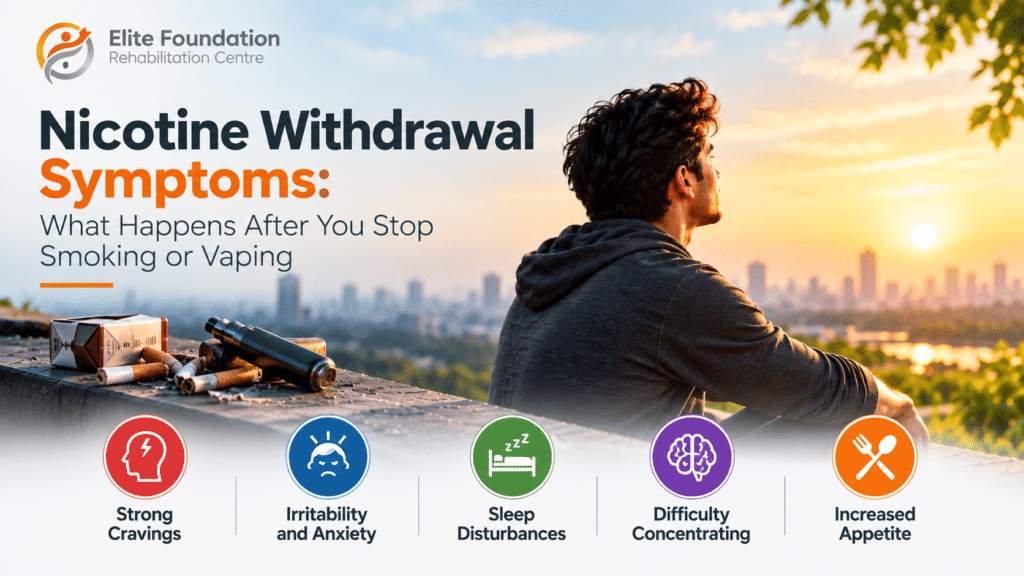
Nicotine withdrawal symptoms can begin within hours of stopping cigarettes, vaping or another nicotine-containing product. Strong cravings, irritability, anxiety, poor concentration and disturbed sleep are among the changes people commonly notice. The first few days can feel particularly difficult, although the experience differs from person to person. Elite Care Rehabilitation Centre’s Titwala nasha mukti kendra serves people from Mumbai and surrounding areas. Its published guide to nicotine addiction and cravings explains how dependence develops; this article focuses on withdrawal, its typical course and ways to manage symptoms safely.
The first morning without cigarettes may feel surprisingly manageable. By lunchtime, however, the person may be distracted, impatient and unable to stop thinking about smoking. Another individual might have few cravings during the day but find it difficult to sleep that night. Someone stopping a nicotine vape may feel restless because they were accustomed to taking puffs throughout the day without noticing how frequently they used the device.
Withdrawal does not follow an identical timetable. The experience depends partly on how much nicotine the person has been receiving, how regularly it was used, whether nicotine replacement treatment is being used and individual responses to stopping.
Understanding the symptoms matters because discomfort is often mistaken for evidence that the body needs another cigarette or vape. In most cases, nicotine withdrawal is temporary and can be managed without residential detoxification. Severe or unusual symptoms, however, should never be automatically attributed to quitting nicotine.
What are nicotine withdrawal symptoms?
Nicotine withdrawal is the collection of physical, emotional and cognitive symptoms that can appear when someone who has developed physical dependence on nicotine stops or substantially reduces their nicotine intake.
Regular nicotine exposure affects nicotinic acetylcholine receptors and related signalling systems in the brain. Over time, physiological adaptations occur. When nicotine exposure falls, those systems must adjust to the change.
During that adjustment, the person may experience cravings, irritability, anxiety, restlessness, concentration difficulties, sleep problems or changes in appetite.
Withdrawal is evidence of physiological adaptation, but it is not identical to the broader condition of nicotine addiction. Addiction also involves patterns such as impaired control, repeated unsuccessful attempts to stop and continuing nicotine use despite adverse consequences.
A person may experience only a few symptoms, while another may find the early period sufficiently uncomfortable to interfere with work, relationships or sleep.
Nicotine withdrawal symptoms: a quick overview
The following are recognised or commonly reported symptoms after stopping nicotine-containing tobacco or vaping products:
- Strong nicotine cravings: repeated urges to smoke, vape or use tobacco again.
- Irritability and anger: feeling unusually impatient, frustrated or easily upset.
- Anxiety and restlessness: tension, nervousness or difficulty sitting comfortably.
- Difficulty concentrating: reduced attention, distractibility or a sense of mental fog.
- Sleep disturbances: difficulty falling asleep, waking frequently or unusual dreams.
- Increased appetite: feeling hungrier, snacking more often or noticing changes in eating habits.
- Low mood: feeling sad, discouraged or less interested in ordinary activities.
- Headaches and tiredness: symptoms reported by some people after quitting, although they can have other causes.
The US Centers for Disease Control and Prevention identifies cravings, irritability, restlessness, concentration difficulties, sleep disturbance, increased appetite and mood changes among important withdrawal-related experiences.
The National Cancer Institute also recognises less commonly reported symptoms after quitting tobacco, including coughing, headaches, fatigue, dizziness, mouth ulcers and constipation. These are not as characteristic as cravings or irritability and may have other medical explanations.
Symptoms should always be considered alongside the person’s health and recent changes in nicotine use. A headache, cough or poor night’s sleep alone does not establish nicotine withdrawal.
How long does nicotine withdrawal last?
Nicotine withdrawal can begin within the first several hours after nicotine use stops. Symptoms are often strongest during the first week, particularly around the first three days, and typically become less intense over the following weeks.
The US National Cancer Institute explains that withdrawal symptoms usually peak during the first three days after quitting and generally decline during the first month. Some people experience symptoms for longer.
This is a description of common patterns, not an individual countdown. A person who uses nicotine replacement may experience a different course from somebody who stops all nicotine abruptly. Long-term heavy use, patterns of vaping, stress, mental health and other factors can influence the experience.
Nicotine withdrawal timeline after quitting
It can help to understand the periods during which symptoms commonly change. These stages overlap, however, and they should not be treated as fixed milestones that everybody must reach on schedule.
First 24 hours: cravings and early adjustment
As nicotine exposure decreases, cravings may begin. Someone who normally smokes immediately after waking might notice the change sooner than a person who only uses tobacco occasionally.
Irritability, restlessness or difficulty concentrating may develop during the day. Familiar routines can make the symptoms more noticeable. The morning cup of tea, a drive to work or a scheduled break may suddenly feel incomplete without nicotine.
Some individuals remain relatively comfortable during this period. For others, finishing the first day without additional support can be difficult.
Days 2 and 3: withdrawal may be most intense
For many people, this is a particularly challenging period. Cravings can become frequent, frustration may increase and concentration may suffer. Sleep difficulties or changes in appetite can also appear.
The discomfort may seem to be getting worse rather than better. That can be discouraging when someone expected every nicotine-free hour to feel easier than the previous one.
The National Cancer Institute’s description of withdrawal commonly peaking within the first three days provides useful context, but it should not become a promise that symptoms will disappear immediately afterwards.
Effective withdrawal treatment may make this period more manageable. Severe cravings do not have to be endured without asking about appropriate support.
Days 4 to 7: symptoms may begin to ease
During the remainder of the first week, physical withdrawal symptoms may become less intense or occur less often. Cravings can still be strong, particularly when the person returns to familiar smoking or vaping situations.
Sleep may remain unsettled. Appetite changes and irritability may continue. It is possible to manage much of the day comfortably but still struggle with a particular routine, such as driving home or meeting friends.
Feeling significantly better by the seventh day is not a requirement. Persistent symptoms may justify reviewing the cessation plan, especially if they are affecting daily functioning.
Weeks 2 to 4: many people notice further improvement
During the following weeks, withdrawal often becomes less intrusive. Concentration may improve, mood may become more stable and cravings may occur less frequently.
Improvement is not always smooth. A difficult working day can bring back a strong urge after several comfortable days. This does not necessarily mean physical withdrawal has returned to its original intensity.
By this stage, familiar behavioural cues may become more noticeable than constant physical discomfort. Smoking-related thoughts may still appear after meals or during certain social situations even when the rest of the day feels manageable.
After the first month: cravings can still return
Many people experience considerable relief from acute physical withdrawal by this stage. However, the end of the early withdrawal period does not mean that all nicotine-related thoughts disappear.
A person who has not smoked for several weeks may suddenly remember cigarettes during a wedding, work celebration or stressful conversation. Those situations may activate learned associations that developed during years of smoking.
Symptoms can also persist longer in individual cases. When low mood, sleep disturbance, anxiety or other difficulties remain significant, it is important to consider other causes rather than automatically labelling everything prolonged nicotine withdrawal.
Why nicotine cravings can feel urgent
Cravings are often the symptom people remember most clearly. The urge may interrupt a conversation, distract someone from work or create the impression that concentration will not return until nicotine is used.
Part of that experience comes from physical dependence. Nicotine exposure has fallen, and the person is accustomed to obtaining nicotine at particular intervals.
The surrounding environment adds another layer. A commuter who has smoked at the same bus stop for years may feel an urge simply on arriving there, even after the strongest physical withdrawal symptoms have reduced.
Cravings commonly rise and fall. Their duration is variable, and no precise number of minutes applies to every episode. Learning to recognise an urge without immediately responding with nicotine is an important part of adjusting to life without the product.
Why irritability and anger can increase after quitting
A normally patient person may become unusually short-tempered during nicotine withdrawal. Small inconveniences can feel more irritating than expected, and family members may notice frustration over situations that previously caused little reaction.
This can be uncomfortable for the person quitting and for everyone around them.
Withdrawal-related irritability does not mean that nicotine was necessary to maintain a healthy personality. It reflects a period of adjustment and may be made worse by poor sleep, stress or repeated cravings.
Family members can be supportive without excusing hurtful behaviour. Recognising withdrawal provides an explanation for the change, not permission for threats, aggression or unsafe conduct.
If anger becomes extreme or involves risk to another person, appropriate assessment and safety measures are more important than treating it as an ordinary withdrawal symptom.
Can nicotine withdrawal cause anxiety?
Yes. Anxiety, tension and nervousness are recognised withdrawal symptoms.
Nicotine-dependent people may be accustomed to the temporary relief that follows smoking or vaping. When nicotine use stops, the discomfort that was previously relieved by another cigarette or puff may become more noticeable.
A meeting may suddenly feel unusually tense, or the person may find it difficult to relax at home without being able to identify a specific external reason.
Anxiety should not automatically be attributed to nicotine withdrawal, however. Panic symptoms, an existing anxiety disorder, excessive caffeine intake, sleep deprivation or other medical problems can also be relevant.
If anxiety is severe, persistent or accompanied by significant physical symptoms, clinical assessment is appropriate.
Difficulty concentrating and nicotine withdrawal brain fog
Many people describe the early days without nicotine as a period of poor concentration or mental fog.
Reading the same email several times, losing track of a conversation or struggling to complete routine tasks can be frustrating, particularly for someone who previously associated nicotine use with alertness.
Concentration difficulties are recognised during nicotine withdrawal. Cravings, restlessness and disturbed sleep can add to the problem.
This does not mean quitting causes permanent cognitive damage. For many people, concentration improves as withdrawal becomes less troublesome.
During the difficult early period, it may help to schedule demanding tasks more thoughtfully, take planned breaks and seek treatment for significant cravings. Persisting or progressively worsening cognitive symptoms should not be explained away without assessment.
Nicotine withdrawal and disturbed sleep
Sleep can change after nicotine use stops. People may struggle to fall asleep, wake more frequently or notice vivid dreams.
Nicotine is a stimulant, but stopping it can still disturb sleep temporarily because the body is adjusting to a familiar pattern of exposure.
There may also be changes unrelated to withdrawal alone. Someone who previously smoked in the evening may now feel restless at the time they would normally have taken a cigarette break.
Nicotine replacement therapy can influence sleep for some users. For example, certain people experience vivid dreams or disturbed sleep while wearing a nicotine patch overnight. Product instructions and advice from a pharmacist or clinician should guide any adjustment rather than changing the regimen independently.
Poor sleep can worsen irritability and concentration the following day, making nicotine cravings more difficult to manage.
Why appetite may increase after quitting nicotine
Nicotine can influence appetite and metabolism. When regular nicotine use stops, greater hunger or more frequent eating may become noticeable.
Part of the change may also be behavioural. A person accustomed to reaching for cigarettes during breaks may begin reaching for food instead.
Increased appetite does not occur to the same extent in everybody, and it does not mean that substantial weight gain is inevitable.
Regular meals, suitable snacks and attention to eating routines may help. Someone with diabetes, an eating disorder or another condition affected by changes in appetite should seek individual advice if needed.
Concerns about weight should not become a reason to resume smoking, which continues to expose the body to serious health risks.
Can nicotine withdrawal cause constipation?
Changes in bowel habits, including constipation, are among the less commonly reported symptoms after stopping tobacco.
Nicotine has effects on gastrointestinal activity, and quitting may also coincide with changes in eating, drinking and daily routines.
Constipation is not specific to nicotine withdrawal. Medication, reduced physical activity, dietary changes and other medical conditions can contribute.
If constipation becomes persistent or severe, or is accompanied by significant abdominal pain, vomiting, bleeding or other concerning symptoms, medical assessment is appropriate.
Headaches, dizziness and tiredness after quitting
Headaches, dizziness and fatigue are among the less common symptoms listed by the National Cancer Institute after tobacco cessation.
These symptoms deserve careful interpretation because they are not unique to nicotine withdrawal.
Changes in caffeine consumption, sleep, hydration, meals, medicines or existing medical conditions may contribute. A person who has been skipping meals because of nausea or stress may feel quite different from somebody whose main difficulty is nicotine craving.
Persistent dizziness, fainting, severe headaches or symptoms that become progressively worse should not be assumed to be routine withdrawal.
The fact that a symptom begins soon after quitting does not prove nicotine withdrawal is its cause.
Can coughing increase after quitting smoking?
Some people notice coughing or changes in mucus after stopping cigarettes. The National Cancer Institute includes coughing among less commonly reported symptoms after quitting tobacco, although it is not a defining feature of nicotine withdrawal.
Changes in airway irritation and mucus clearance may also contribute. Tobacco smoke affects the respiratory tract, including the normal mechanisms that help move mucus and particles out of the airways. As smoke exposure stops, respiratory symptoms may change, but coughing should not automatically be described as the lungs undergoing a fixed detoxification process.
Not every cough appearing after smoking cessation is related to quitting. Respiratory infection, asthma, chronic lung disease and other conditions may cause similar symptoms.
A persistent or worsening cough, or coughing accompanied by chest pain, breathlessness, fever or blood in the sputum, requires appropriate medical assessment. Severe breathing difficulty, severe chest pain or other immediate danger requires urgent emergency care.
Nicotine withdrawal after vaping: is it different from cigarettes?
Stopping a nicotine-containing vape can produce many of the same withdrawal symptoms seen after stopping cigarettes: cravings, irritability, anxiety, restlessness, sleep disturbance, appetite changes and concentration difficulties.
The US National Cancer Institute’s Smokefree.gov vaping resources describe these symptoms for people who quit vaping.
Yet vaping patterns can differ considerably from cigarette smoking. Some devices are used repeatedly throughout the day, and the nicotine delivered depends on the product, formulation, device and how it is used.
One person may use a low-nicotine product occasionally, while another uses a high-concentration product frequently. Their dependence and withdrawal should not be assumed to be identical.
The evidence base for tobacco cessation is also more established than the evidence identifying the best treatment approaches for every population trying to stop vaping. That distinction is important when discussing medicines or promising a specific recovery timetable.
What if the vape contains no nicotine?
A genuinely nicotine-free product would not be expected to cause physiological nicotine withdrawal through nicotine exposure alone.
However, a person may still miss the familiar hand-to-mouth action, the sensation of inhaling or the situations associated with using the device. Those experiences should be distinguished from nicotine withdrawal.
Product labels are not always reliable, particularly with unregulated products. The person may also have been smoking cigarettes or using other nicotine products alongside vaping.
If withdrawal-like symptoms develop, the wider pattern of nicotine exposure and other possible causes should be considered rather than relying solely on the stated nicotine content of one device.
Why quitting a vape can disrupt everyday routines
Cigarette smoking often involves recognisable breaks. Vaping may take place more continuously, depending on the person and device.
A vape may be used while watching videos, studying, working at a computer or travelling. The person may have taken small puffs repeatedly without treating each use as a separate event.
After stopping, ordinary activities can seem unusually uncomfortable because they were repeatedly associated with vaping.
That discomfort can coexist with nicotine withdrawal, but the two are not identical. Understanding the difference helps explain why urges may still occur when acute physical withdrawal has reduced.
Elite Foundation’s vaping addiction treatment page addresses the wider dependence and behavioural concerns associated with vaping. Nicotine withdrawal itself generally does not require automatic residential admission.
Withdrawal can also occur after stopping smokeless tobacco
In India, nicotine withdrawal should not be discussed only in relation to cigarettes and vapes.
Khaini, zarda, tobacco-containing gutkha and other smokeless tobacco products can deliver nicotine and cause physical dependence.
Someone accustomed to placing tobacco in the mouth repeatedly during work may notice cravings, irritability or restlessness when the product is unavailable.
Different products have different delivery characteristics and patterns of use, so a cigarette-specific withdrawal timetable should not automatically be applied to every smokeless tobacco user.
For adults trying to stop smokeless tobacco, the World Health Organization recommends intensive behavioural support and identifies varenicline or nicotine replacement therapy as pharmacological options, with different levels of evidence certainty.
Why withdrawal can feel different when more than one product is used
Cigarettes and vapes are sometimes used together. Other people smoke bidis and chew tobacco at different times of day.
If one product is stopped but another nicotine-containing product remains in use, total nicotine exposure may decrease without ending entirely.
This can produce a different experience from stopping all nicotine at once. Cravings for a particular product may persist because of familiar routines even if nicotine exposure continues through another source.
For accurate assessment, it is important to describe every nicotine-containing product being used, not just the one the person has decided to stop.
Does nicotine replacement therapy prevent withdrawal?
Nicotine replacement therapy, or NRT, can reduce withdrawal symptoms and cravings for many adults trying to stop smoking.
Medicinal nicotine is delivered through products such as patches, gum or lozenges, without exposing the person to the smoke produced by burning cigarettes.
There is an important distinction here: stopping cigarettes while continuing nicotine replacement does not mean that all nicotine has left the body. Instead, the person has stopped combustible tobacco exposure while using medicinal nicotine to manage dependence during cessation.
For eligible adult smokers, the WHO’s 2024 tobacco-cessation guideline recommends NRT among evidence-based treatments. Combination NRT, using a patch with an appropriate shorter-acting formulation, is another supported option.
Medication choices for people who vape exclusively, adolescents, pregnant people or those with complex medical conditions require individual clinical consideration. The evidence and indications should not be assumed to be identical across all groups.
Can withdrawal symptoms happen while using nicotine patches?
Yes, cravings or other symptoms can continue while a person is using nicotine replacement.
This may reflect differences between the amount and pattern of nicotine previously received and the replacement treatment being used. Behavioural triggers can also remain present even when physical withdrawal is better controlled.
Symptoms do not necessarily mean the treatment is ineffective. They may indicate that the regimen, adherence or additional behavioural support needs review.
Nicotine replacement products can also have side effects of their own. For example, some users experience sleep disturbance, nausea or local irritation depending on the formulation.
Do not automatically treat every symptom during NRT use as withdrawal or respond by taking additional nicotine without checking product instructions or clinical advice.
What can help reduce nicotine withdrawal symptoms?
The most effective response depends on the symptom and the individual. Strong physical cravings may call for different support from the approach used for disturbed sleep or anxiety.
For eligible adult smokers, evidence-based cessation medicines can reduce withdrawal. Counselling may help manage behaviour and situations that trigger nicotine use. The two approaches can be used together when appropriate.
Several practical adjustments may also make the early period easier.
- Plan for familiar triggers: change the setting of tea breaks, journeys or other routines closely associated with nicotine use.
- Address physical cravings: discuss appropriate cessation medicines with a qualified healthcare professional when symptoms are difficult to manage.
- Protect sleep: maintain a consistent sleep routine and avoid unnecessary late-evening stimulation.
- Stay physically active: a walk or other suitable activity can provide an alternative during periods of restlessness.
- Eat regularly: plan meals and snacks if increased appetite or irregular eating becomes a problem.
- Seek support for mood symptoms: worsening anxiety or depression deserves attention rather than simply waiting for it to pass.
These measures should not be treated as equally effective clinical treatments. Lifestyle changes may provide useful support, whereas appropriately selected cessation medication and behavioural interventions have a more substantial evidence base for helping adults stop tobacco use.
Why drinking water is not a nicotine detox treatment
Drinking water can help someone remain hydrated and may provide a simple alternative activity during a craving.
However, there is no reliable evidence that drinking unusually large amounts of water rapidly removes nicotine dependence or prevents withdrawal.
The body already metabolises and eliminates nicotine through established physiological processes. Withdrawal symptoms reflect adaptation to nicotine exposure and cannot be resolved simply by forcing more fluid through the body.
Excessive water intake can itself be harmful. Ordinary hydration is sensible; special detox drinks, extreme water consumption and unverified cleansing products are unnecessary.
Why caffeine may feel stronger after stopping cigarettes
People who smoke cigarettes sometimes notice increased jitteriness, disturbed sleep or nervousness after quitting, even though they have not increased the amount of tea or coffee they drink.
This may be partly explained by changes in caffeine metabolism. Components of tobacco smoke can increase the activity of an enzyme involved in processing caffeine. When smoking stops, caffeine may remain in the body longer.
This effect is associated with tobacco smoke rather than nicotine alone. Someone who stops cigarette smoking and switches to medicinal nicotine replacement may still experience the change.
Reducing caffeine, particularly later in the day, may help if coffee or strong tea is contributing to anxiety or poor sleep. Caffeine use should nevertheless be considered in the broader context of the person’s health and usual routine.
Stopping smoking can also change the effects of some medicines
Changes in tobacco-smoke exposure can alter the metabolism or clinical effects of certain regular medicines.
NICE identifies medicines including clozapine, olanzapine, theophylline and warfarin as examples for which monitoring or dose review may be necessary when smoking stops or restarts.
This is especially important for somebody taking psychiatric medication. Symptoms after stopping cigarettes should not automatically be regarded as nicotine withdrawal if a medicine’s effect has also changed.
Tell the prescribing clinician about significant changes in smoking. Do not change medication doses without medical guidance.
Does quitting nicotine make anxiety or depression worse permanently?
Temporary mood changes are possible during nicotine withdrawal, but this does not establish that a person needs nicotine to remain emotionally well.
Research on smoking cessation and longer-term mental health is generally reassuring. A Cochrane systematic review published in 2021 found no evidence that stopping smoking worsens mental health overall compared with continuing to smoke, and it reported associations with improvements in anxiety, depression and stress. The certainty of evidence varied across outcomes.
These findings apply to the populations and smoking-cessation studies examined. They should not become a promise that every person will immediately feel less anxious or that a separate mental-health condition will improve without treatment.
If depression, severe anxiety or major functional difficulties appear or worsen during a quit attempt, appropriate clinical care matters. Such symptoms deserve assessment regardless of whether nicotine withdrawal is also occurring.
How family members can respond during nicotine withdrawal
The early quitting period may be uncomfortable for the person stopping nicotine and for those living with them.
A spouse may notice irritability. Children may find that a parent is distracted. A colleague may notice someone taking more breaks than usual.
Understanding that withdrawal can affect mood and attention may reduce unnecessary arguments. Support might include respecting a smoke-free home, avoiding repeated offers of tobacco and encouraging the person to follow their treatment plan.
Family members should not feel obliged to tolerate threatening or unsafe behaviour. Withdrawal is not a reason to abandon ordinary boundaries.
If the person is becoming increasingly distressed, withdrawn or unable to function, discussing the symptoms with a healthcare professional is more useful than assuming they must simply be endured.
Nicotine withdrawal in teenagers and young adults
Adolescents who become dependent on nicotine may experience cravings, irritability, anxiety, concentration difficulties and other withdrawal symptoms when they stop.
For a student, these symptoms may be mistaken for ordinary examination stress or lack of concentration. A young person who has been using a nicotine-containing vape regularly might not immediately recognise why they feel restless or irritable without it.
Assessment needs to consider age, developmental stage, nicotine exposure, school or college functioning and any existing mental-health concerns.
Adult tobacco-cessation medication recommendations should not be automatically applied to teenagers. A qualified clinician should assess whether medication is appropriate and which forms of support are suitable.
Parents should avoid treating every mood change as proof of vaping, but repeated nicotine use combined with difficulty stopping deserves a constructive conversation and appropriate professional assessment.
Can nicotine withdrawal be dangerous?
Nicotine withdrawal is generally uncomfortable rather than medically dangerous in the way that severe alcohol or sedative withdrawal can be.
Most people do not require hospital detoxification simply because they have stopped smoking, chewing tobacco or using nicotine-containing vaping products.
However, a common mistake is to assume that every new symptom after quitting must be harmless withdrawal.
Chest pain, severe breathlessness, fainting, new neurological symptoms, a sudden severe headache or other serious physical symptoms require prompt medical assessment according to their severity.
Severe depression, suicidal thoughts or a marked deterioration in an existing psychiatric condition also require professional attention. These should not be dismissed as expected consequences of quitting nicotine.
When to seek medical help during nicotine withdrawal
If cravings, anxiety or sleep difficulties are making it impossible to function normally, a healthcare professional can review the quitting plan and consider suitable treatment.
Persistent or severe symptoms may require assessment for problems unrelated to nicotine withdrawal. This is particularly important where significant medical illness, pregnancy, psychiatric medication or other substance use is involved.
A cough that is worsening, persists or occurs with fever, breathlessness, chest pain or blood in the sputum also warrants medical assessment. Its appearance after smoking cessation does not establish that withdrawal is the cause.
For immediate emergencies, such as severe chest pain, serious breathing difficulty or imminent risk of self-harm, urgent emergency care is necessary.
In India, call 112 or attend the nearest emergency department when immediate safety is at risk.
Does nicotine withdrawal require residential rehabilitation?
For most people, no. Nicotine withdrawal can usually be managed through outpatient treatment, tobacco-cessation services, appropriate medicines and behavioural support.
Residential admission is not automatically indicated because somebody has smoked for many years, used a nicotine-containing vape frequently or experienced a difficult first week of withdrawal.
More intensive care may be needed when a person has additional significant psychiatric illness, another substance-use condition, major safety concerns or other circumstances requiring individual clinical assessment.
The care setting should reflect the person’s overall needs, not simply the presence of nicotine withdrawal symptoms.
For an explanation of how clinical assessment helps determine the appropriate level of support, see Elite Foundation’s guide to addiction treatment and follow-up. The discussion of medically managed withdrawal for other substances should not be taken to mean that routine nicotine withdrawal needs residential detoxification.
Free support for tobacco withdrawal and quitting in India
People trying to stop cigarettes, bidis or smokeless tobacco can seek help through public tobacco-cessation services.
WHO India reported in May 2026 that the Ministry of Health and Family Welfare’s National Tobacco QuitLine provides free cessation counselling and follow-up support.
The toll-free number is 1800-112-356.
This service provides counselling for tobacco cessation and is separate from private rehabilitation centres. People using vaping products exclusively may need an individual assessment of available support and appropriate treatment options.
Frequently asked questions about nicotine withdrawal symptoms
What are the first signs of nicotine withdrawal?
Early signs may include cravings, irritability, restlessness, anxiety or difficulty concentrating. The first symptom and the time it begins depend on nicotine dependence, previous use and whether replacement treatment is being used.
How soon does nicotine withdrawal start?
Symptoms may begin within hours of the last nicotine exposure. People who normally use nicotine soon after waking may notice the change particularly early, but there is no identical starting time for everybody.
When are nicotine withdrawal symptoms the worst?
The National Cancer Institute reports that symptoms are usually strongest during the first week, often peaking during the first three days. This is a typical pattern, not a guarantee for each individual.
How long does nicotine withdrawal last?
Many symptoms become less intense over the first several weeks, commonly during the first month. Symptoms can last longer, and cravings associated with old habits may reappear months after quitting.
What happens after 24 hours without nicotine?
Cravings, irritability, restlessness or reduced concentration may become noticeable. The experience depends on previous nicotine exposure, level of dependence and whether any nicotine replacement is being used.
What happens after three days without nicotine?
For many people, the first three days are among the most uncomfortable periods of withdrawal. Symptoms may begin easing afterwards, but there is no guarantee of improvement on a particular day.
Are vaping withdrawal symptoms the same as smoking withdrawal?
Stopping a nicotine-containing vape can produce similar symptoms, including cravings, irritability, anxiety, sleep disturbance and concentration difficulties. The intensity depends on individual nicotine exposure, device use and other circumstances.
Can vaping withdrawal cause headaches?
Yes, headaches are reported by some people who stop nicotine vaping. However, headaches are not specific to nicotine withdrawal and may have other causes. Severe, persistent or unusual headaches require assessment.
Can a nicotine-free vape cause nicotine withdrawal?
A genuinely nicotine-free product would not be expected to cause physiological nicotine withdrawal through nicotine exposure alone. Habit-related urges may still occur, and actual exposure to nicotine should be considered if other products were used or labelling is unreliable.
Why do I feel anxious after quitting smoking?
Anxiety can be part of nicotine withdrawal. Poor sleep, caffeine and existing anxiety conditions may also contribute. Persistent or severe anxiety should not automatically be attributed to withdrawal.
Does nicotine withdrawal cause depression?
Low mood can occur during nicotine withdrawal, but it does not explain every episode of depression after quitting. Significant, persistent or worsening depressive symptoms need clinical assessment, particularly when there is an existing mental-health condition.
Why can I not concentrate after quitting nicotine?
Difficulty concentrating is a recognised withdrawal symptom. Cravings, restlessness and poor sleep may contribute. Concentration often improves over time, but severe or ongoing cognitive difficulties deserve assessment.
Does nicotine withdrawal affect sleep?
Yes. Trouble falling asleep, frequent waking or unusual dreams may occur. Nicotine replacement products can also affect sleep in some users, depending on the formulation. Persistent sleep problems should be reviewed.
Does nicotine withdrawal make you hungry?
Increased appetite is common. Nicotine influences appetite and metabolism, and stopping may also change eating habits. The effect varies, and substantial weight gain is not inevitable.
Can nicotine withdrawal cause constipation?
Changes in bowel habits, including constipation, are reported less commonly after quitting tobacco. Diet, activity, medicines and other medical conditions may also be relevant. Severe or persistent symptoms require assessment.
Can nicotine withdrawal cause dizziness?
The National Cancer Institute lists dizziness among less commonly reported symptoms after quitting. However, dizziness has many possible causes. Fainting, severe or persistent dizziness, or accompanying serious symptoms should not be treated as ordinary withdrawal.
Can coughing increase after quitting smoking?
Yes. The National Cancer Institute lists coughing among less commonly reported symptoms after quitting tobacco. It is not a core or specific sign of nicotine withdrawal, and changes in airway irritation or mucus clearance may also contribute. A persistent or worsening cough, particularly with chest pain, breathlessness, fever or blood in the sputum, requires medical assessment.
Can nicotine patches reduce withdrawal symptoms?
Yes. For eligible adult smokers, nicotine replacement therapy can reduce cravings and withdrawal symptoms. The appropriate formulation and regimen depend on individual circumstances, product instructions and clinical advice.
Why do I still crave cigarettes when using nicotine gum?
Nicotine replacement may reduce withdrawal without removing every behavioural trigger. The treatment regimen may also require review. Do not exceed labelled or prescribed use without appropriate advice.
Does drinking more water remove nicotine withdrawal?
No. Staying normally hydrated can be helpful, but drinking excessive water does not cure nicotine dependence or guarantee faster withdrawal recovery. The body processes nicotine through its usual metabolic pathways.
Is nicotine withdrawal worse than quitting smoking itself?
Withdrawal is one part of stopping nicotine-containing products. The difficulty of quitting can also involve established routines, emotional associations, social circumstances and access to tobacco. These factors differ between individuals.
Can withdrawal return after several weeks?
Cravings and some difficulties may continue or reappear after several weeks. A later urge triggered by an old habit is not necessarily the same as restarting acute physical withdrawal.
Does one cigarette immediately stop withdrawal?
Smoking can temporarily relieve some withdrawal symptoms by delivering nicotine, but it also continues smoke exposure and can reinforce dependence. Evidence-based cessation treatments provide safer ways for eligible adults to manage withdrawal.
Is it possible to have no nicotine withdrawal symptoms?
Yes. Experiences differ. Withdrawal may be mild or barely noticeable for some people, while others report intense cravings, sleep difficulties or mood changes. The absence of noticeable withdrawal does not make tobacco use harmless.
Can quitting nicotine permanently damage the brain?
Ordinary nicotine withdrawal is not known to cause permanent brain damage. Temporary changes in concentration, mood or sleep may occur. Persistent or serious neurological symptoms should be medically assessed rather than attributed to withdrawal.
When should I worry about nicotine withdrawal symptoms?
Seek medical assessment when symptoms are severe, unusual, persistent or significantly interfere with daily functioning. Persistent or worsening coughing, chest pain, severe breathing problems, fainting, new neurological symptoms or imminent safety risks require prompt or urgent care depending on severity.
Nicotine withdrawal becomes easier to manage when symptoms are understood correctly
Quitting cigarettes, vaping or smokeless tobacco can create a difficult adjustment period. Cravings, irritability, poor concentration, sleep disturbance and appetite changes may occur as nicotine exposure decreases.
For many people, the first few days are particularly uncomfortable and the symptoms gradually ease over the following weeks. There is no single timeline that applies to every smoker, person who vapes or smokeless tobacco user.
Some less common symptoms, including coughing, headaches, dizziness and constipation, may also be reported after quitting. Because these symptoms can have other causes, they deserve careful interpretation rather than being automatically attributed to withdrawal.
The distinction between physical withdrawal and learned habits is important. A strong urge during the first nicotine-free morning may reflect withdrawal, while a sudden craving at a familiar tea stall months later may be connected more closely with a longstanding association.
Both experiences deserve attention, but neither means that returning to tobacco is medically necessary.
Appropriate cessation medicines, behavioural support and individual assessment can reduce unnecessary suffering during quitting. Most people do not require residential detoxification for nicotine withdrawal alone, and treatment should reflect the actual severity of symptoms and any wider health concerns.
Withdrawal should not become an explanation for every symptom that appears after quitting. Serious physical illness, significant depression, medication-related problems or other medical conditions require their own assessment.
Understanding what is common, what is less typical and what requires medical attention allows people to approach nicotine withdrawal with more realistic expectations and a safer recovery plan.
Medical and safety disclaimer: This article provides general educational information and is not a substitute for medical diagnosis or individual treatment. Nicotine withdrawal can vary according to age, cigarette or vaping history, smokeless tobacco use, nicotine exposure, other medicines, pregnancy status and physical or mental health. The timelines described are population-level patterns, not predictions for any particular individual. Medication and nicotine replacement treatment should follow appropriate product guidance and qualified healthcare advice, especially for adolescents, pregnant people and those with complex health conditions. Symptoms such as persistent or worsening cough, coughing with blood in the sputum, chest pain, serious breathing difficulty, fainting, severe mood deterioration or suicidal thoughts should not automatically be attributed to nicotine withdrawal. Immediate danger requires urgent emergency care.
