
Brown Sugar Addiction Treatment for Mumbai Families –
Elite Care, Titwala
Families looking for brown sugar addiction treatment in Mumbai are often dealing with more than occasional drug use. Repeated attempts to stop, withdrawal between doses, increasing secrecy, unexplained spending, disrupted sleep and changes in work, studies or family responsibilities may indicate that opioid use has become difficult to control.
In India, “brown sugar” is commonly used as a street term for an illicit heroin preparation. Because street products are not medically standardised, their strength and contents may vary. When repeated opioid use has led to tolerance, physical dependence or persistent craving, treatment should be planned around the person's medical condition, psychiatric health, other substance use, previous treatment history and relapse risk.
Elite Care Rehabilitation Centre, Titwala, Thane provides structured addiction treatment for individuals and families from Mumbai, Thane, Kalyan, Dombivli, Navi Mumbai and other parts of India. Depending on clinical assessment, care may include withdrawal management, psychiatric treatment, medication for opioid use disorder where appropriate, residential rehabilitation, counselling, family involvement and continuing relapse-prevention support.
Clinically reviewed by Dr Harish Bedekar, MD (Psychiatry), Medical Director.
Last medically reviewed: 11 August 2026
Need to discuss a brown sugar or heroin problem now? Call +91 7506 413 513 — confidential admission enquiry.
Brown Sugar Dependence Is a Clinical Condition, Not Simply a Habit
Repeated heroin exposure can produce tolerance, physical dependence and strong craving. A person may begin using again not only to experience an opioid effect, but also to relieve withdrawal symptoms such as body pain, sweating, restlessness, gastrointestinal discomfort, anxiety and disturbed sleep.
At the same time, dependence can become closely linked with daily routines, access to money, specific people and places, emotional distress and previous patterns of relapse. This combination explains why determination alone may not be enough to sustain abstinence once a clinically significant opioid-use disorder has developed.
For families comparing a brown sugar detox centre in Mumbai with a full brown sugar addiction rehab in Mumbai, the distinction is important. Detoxification addresses withdrawal. Ongoing treatment addresses the wider opioid-use disorder, including craving, psychiatric health, relapse risk, family stress and the environment to which the person will return.
How Heroin-Type Opioids Affect the Body and Produce Dependence
When a brown sugar preparation contains heroin, it acts on opioid receptors in the brain and body. With repeated exposure, the nervous system adapts. Tolerance may develop, meaning that an amount that once produced a strong effect may have less effect over time. Physical dependence can also develop, so a fall in opioid exposure may trigger withdrawal.
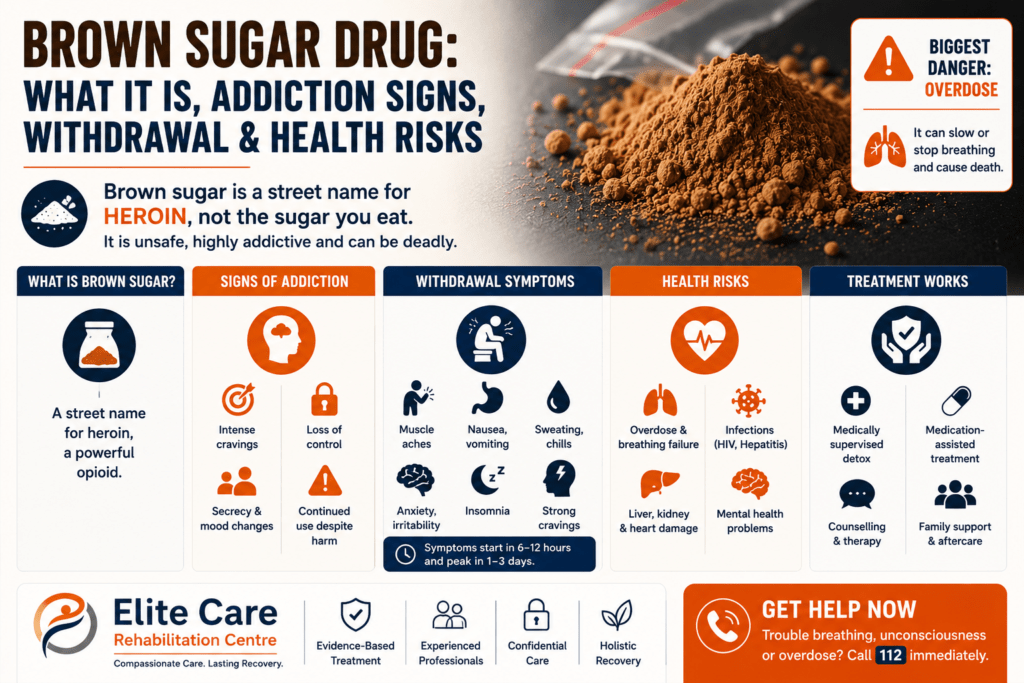
With heroin, withdrawal may start within several hours of the last use. Clinical guidance commonly describes symptoms beginning around 8–12 hours in some patients, becoming most intense around 48–72 hours, and then easing over the following days. Acute symptoms often improve considerably over about 7–10 days, although craving, disturbed sleep, low mood or poor energy can continue longer. Street preparations are not medically standardised, so an exact personal timeline cannot be predicted from the term “brown sugar” alone.
The person may experience watery eyes, a runny nose, repeated yawning, sweating, anxiety, irritability, muscle and body pain, abdominal cramps, nausea, vomiting, diarrhoea, poor sleep and strong craving. Symptoms vary according to the opioid used, frequency and duration of use, other substances, physical health and previous withdrawal history.
Families who want a deeper explanation can read our guide on brown sugar drug addiction and withdrawal risks. The aim is to understand why a medically assessed plan is safer than relying on a fixed home-detox formula copied from another person's experience.
How Can Families Recognise When Brown Sugar Use Needs Treatment?
Brown sugar addiction does not always announce itself with one dramatic event. More often, the family notices a pattern that becomes harder to explain away. One sign alone does not diagnose opioid-use disorder, but several signs repeating over days or weeks deserve professional assessment.
These are some of the situations families commonly describe when contacting a brown sugar addiction treatment centre in Mumbai:
Withdrawal Between Doses
Body pain, sweating, restlessness, watery eyes, stomach symptoms or marked irritability appear when the person has not used for several hours.
Increasing Dose or Frequency
The same amount no longer seems enough, use becomes more frequent, or the person starts organising the day around obtaining the next dose.
Money & Valuables Disappear
Repeated borrowing, unexplained cash withdrawals, debts, missing jewellery or sold belongings may show how strongly drug-seeking is controlling decisions.
Secretive Absences & Contacts
Unexplained trips, disappearing for hours, new secrecy around the phone or returning to old drug-using contacts can be part of the active use cycle.
Work, Studies & Routine Decline
Missed work, poor attendance, lost interest, sleeping through responsibilities and neglect of food, hygiene or family commitments may become more frequent.
Repeated Failed Attempts to Stop
The person may genuinely try to stop several times, remain drug-free briefly, then return as craving, withdrawal or the same environment becomes difficult to manage.
Medical and Psychiatric Assessment Before Brown Sugar Addiction Treatment
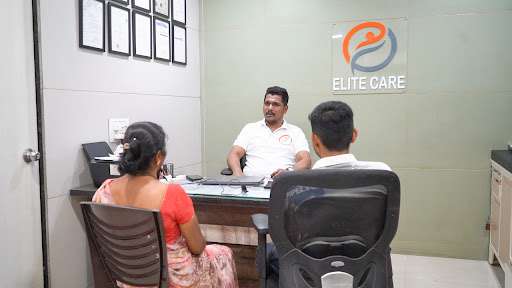
A professional rehab for brown sugar addiction in Mumbai should begin with assessment rather than a standard package. The treatment team needs to establish what the person has been using, how severe the opioid dependence appears to be, whether other substances are involved, and which medical, psychiatric or social factors may affect treatment safety and recovery.
The assessment should cover the age of first use, frequency, approximate quantity, route of use, last dose, periods of abstinence, previous detox attempts and previous rehabilitation. It should also ask about prescription opioids, alcohol, sleeping tablets, anti-anxiety medicines, cannabis, stimulants and other drugs. This matters because simultaneous dependence on another substance can change the safety picture significantly.
Physical health needs attention too. People entering treatment may be dehydrated, undernourished, injured or living with infections, liver or kidney problems, chronic pain or other illnesses. Where injecting has occurred, a doctor may consider injection-related complications and blood-borne infection testing according to clinical indications.
Mental health is part of the same assessment. Depression, anxiety, trauma-related symptoms, severe insomnia, impulsivity, psychosis or suicidal thoughts can coexist with opioid dependence. At Elite Care, psychiatric assessment helps determine whether the substance problem is occurring alongside another condition that also needs treatment. Families can read more about co-occurring mental health conditions and why they should not be ignored during addiction care.
AIIMS National Drug Dependence Treatment Centre describes opioid treatment as involving both pharmacological and psychosocial approaches. That combination is central to modern opioid care: stabilise the body, assess the mind, and then work on the behaviour and environment that make relapse likely.
Brown Sugar Intoxication, Withdrawal and Overdose: What Families Should Know
| Situation | What the family may notice | What it means / what to do |
|---|---|---|
| Opioid intoxication | Marked drowsiness, slowed reactions, unusually small pupils or difficulty staying awake. | The person needs observation and clinical assessment. If breathing is abnormal or the person cannot be awakened normally, treat it as an emergency. |
| Opioid withdrawal | Restlessness, body aches, sweating, watery eyes, runny nose, yawning, abdominal symptoms, poor sleep and strong craving after stopping. | Withdrawal can drive rapid return to use. A medically assessed withdrawal plan can reduce avoidable distress and identify other risks. |
| Possible opioid overdose | Unconsciousness, inability to wake normally, very slow or abnormal breathing, or not breathing normally. | Seek emergency medical care immediately. In India call 112. Naloxone can reverse opioid overdose temporarily when available and used appropriately. |
| Return to use after abstinence | The person resumes brown sugar after detox, rehab or another drug-free period. | Tolerance may have fallen. A previously tolerated amount can become more dangerous. Rapid reassessment and renewed treatment are important. |
| Brown sugar plus sedating substances | Use occurs with alcohol, sleeping tablets, anti-anxiety medicines or other sedating drugs. | Combined sedation can increase clinical risk. Tell the treating doctor exactly what substances or medicines may have been taken. |
Medical Detox and Opioid Withdrawal Management
Medical detox for brown sugar addiction begins with assessment rather than a fixed medicine list. The team reviews what was used, when the last dose was taken, previous withdrawal, other substances, current medicines and physical or psychiatric conditions. During the early phase, symptoms may change quickly, so monitoring is more useful than assuming the first few hours represent the whole withdrawal.
Care may include attention to hydration, nutrition, sleep, vomiting or diarrhoea, pain, anxiety and other symptoms. Medicines can be considered by a qualified doctor according to the diagnosis and the treatment plan. The objective is not simply to keep the person inside a facility until a certain number of days have passed. It is to stabilise the patient and create a safe bridge into rehabilitation.
For families trying to understand the difference between withdrawal care and longer recovery work, see Detox vs Rehab: What’s the Difference and Why Both Matter?
Medicines for Opioid Use Disorder: When Clinically Appropriate
Evidence-based opioid treatment may include medicines such as buprenorphine, methadone or naltrexone in appropriately selected patients. They do not all work in the same way, and they are not interchangeable.
Buprenorphine and methadone are opioid agonist treatments used in opioid dependence. Naltrexone is an opioid antagonist and requires an appropriate opioid-free interval before it can be started. The choice depends on the patient's diagnosis, recent opioid exposure, treatment goals, medical history, regulatory requirements and ability to continue follow-up.
This is one area where online self-treatment can become unsafe. A medicine that is right for one patient may be inappropriate for another, and starting certain treatments at the wrong time can create additional problems. Medication decisions should therefore remain with the treating clinician.
Families often ask whether using medication means “replacing one addiction with another”. That is not an accurate way to understand evidence-based opioid treatment. Properly prescribed treatment is structured medical care with defined goals, dosing and follow-up. The clinical aim is to reduce uncontrolled opioid use, stabilise functioning and support recovery.
WHO's April 2026 rapid communication on updated opioid-dependence guidance reaffirmed strong recommendations for opioid agonist maintenance treatment with methadone and oral buprenorphine, with treatment selected according to the patient's clinical needs. Read the WHO 2026 update.
Individual Therapy, CBT and Motivational Work
Once the immediate withdrawal settles, the treatment focus becomes broader. A person can be physically free of opioids and still think about brown sugar throughout the day. They may still have a dealer's number, pass the same location, receive salary, meet the same friends or believe that one dose can now be controlled.
Individual counselling helps identify the person's own relapse chain. Cognitive Behavioural Therapy can be used to examine the connection between situations, thoughts, emotions, craving and action. Motivational work is useful when the patient feels divided — one part wanting recovery, another part missing the immediate relief associated with the drug.
For example, relapse may begin long before the substance is used: poor sleep → irritability → argument at home → leaving the house → calling an old contact → thinking “only once” → use. Therapy tries to interrupt that sequence earlier, when choices are still easier to make.
Treatment may also work on shame, anger, boredom, loneliness, impulsive decision-making and the difficulty of tolerating discomfort without reaching for an opioid. These are practical recovery skills, not abstract counselling topics.
Family Counselling and Relapse-Prevention Planning
Brown sugar addiction rarely affects only the person using the drug. Parents may repay debts, spouses may hide cash, siblings may stop trusting anything they are told, and the whole household can become organised around checking, arguing, rescuing and reacting.
Family counselling is not about blaming relatives for the addiction. It helps the household decide what support is useful and what behaviour unintentionally keeps the cycle going. Sessions may cover money, access to vehicles, contact with drug-using peers, communication, threats, repeated demands, treatment expectations and what to do if warning signs return after discharge.
Relapse prevention should begin before the patient leaves residential care. The plan needs to be specific: Who should be contacted when craving becomes strong? Which old numbers need to stay blocked? How will money be handled initially? What happens if sleep deteriorates? Which follow-up appointments are already booked? What should the family do if the person disappears or reconnects with a supplier?
The more clearly these questions are answered in advance, the less the family has to improvise during a crisis.
Important treatment distinction: Detoxification and rehabilitation are not the same treatment stage. Detox addresses the early physical consequences of stopping opioids. Rehabilitation addresses craving, behaviour, psychiatric health, relationships, routines and the conditions that repeatedly lead back to use. A negative drug test after detox is encouraging, but it is not the same as long-term recovery.
Residential Rehabilitation After Detox: Building Stability Beyond Withdrawal
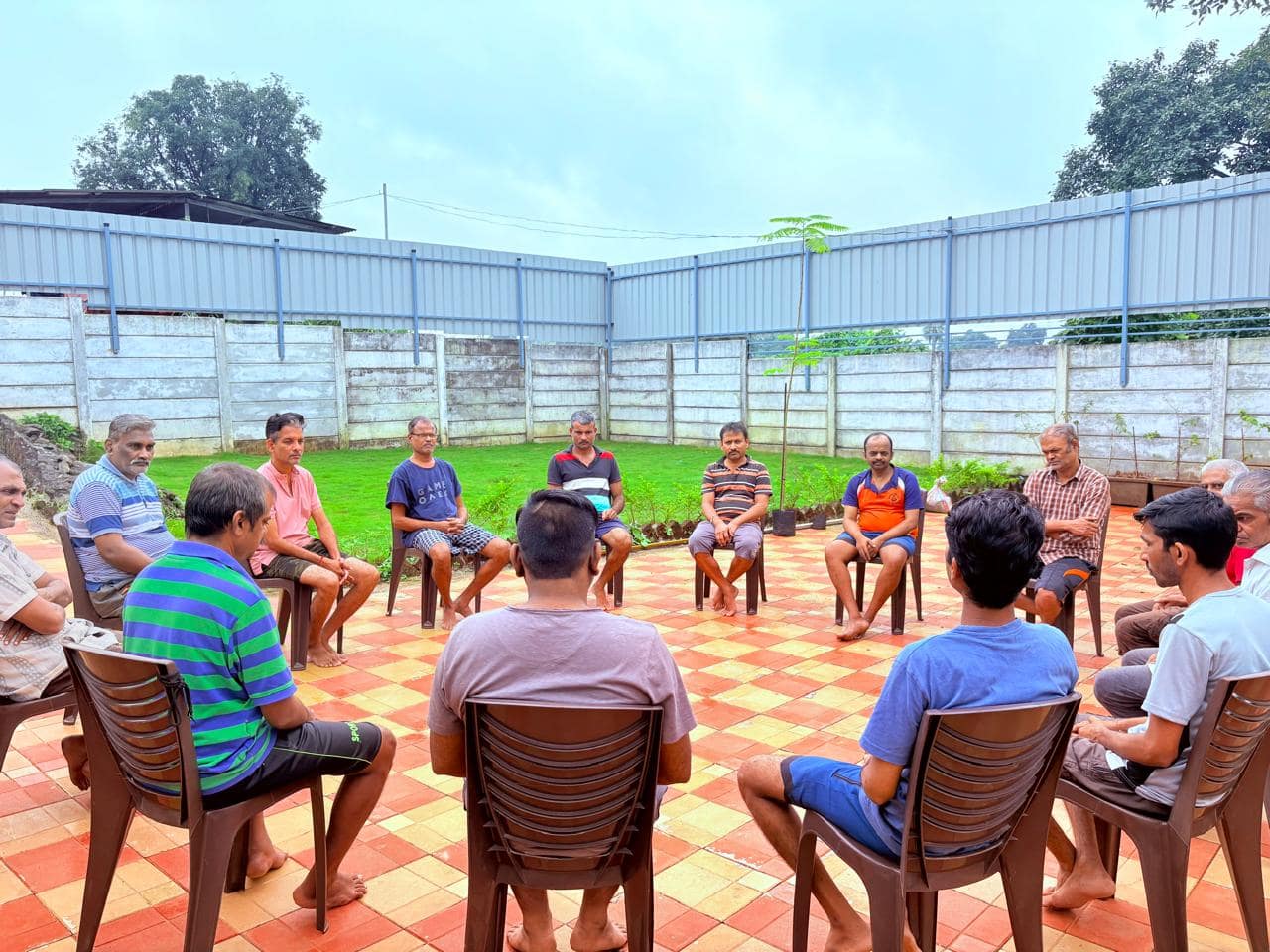
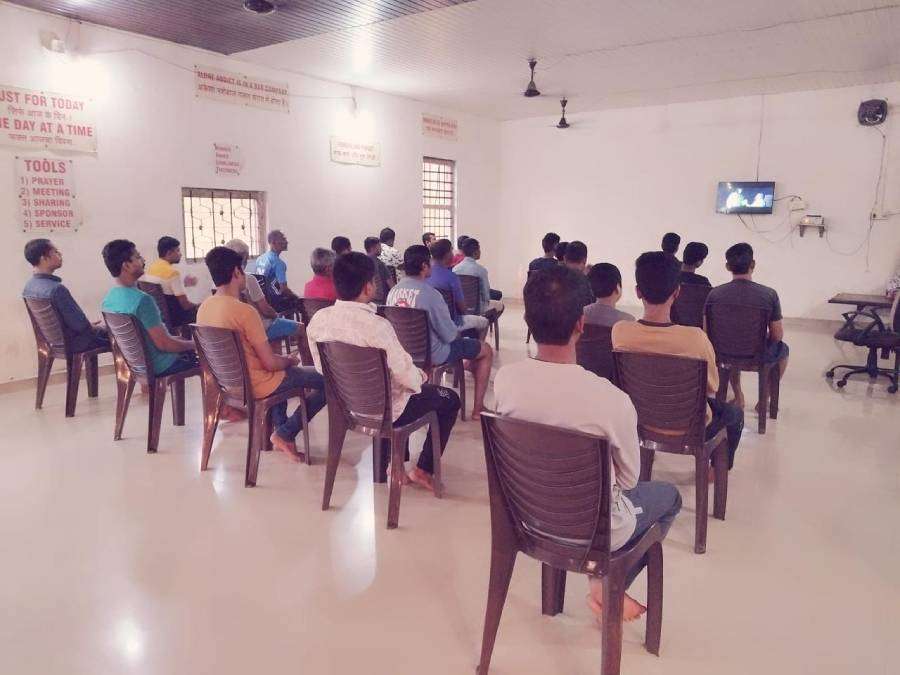
Detoxification addresses the acute withdrawal phase, but residential rehabilitation has a broader purpose. A structured residential rehab for brown sugar addiction provides time to stabilise sleep and routine, continue psychiatric and medical care, work on craving and relapse triggers, and prepare the patient and family for recovery outside the centre.
A typical day may include a regular wake-up time, meals, prescribed medication where applicable, clinical reviews, individual counselling, group sessions, psychoeducation, physical activity, reflective work and planned family sessions. The exact timetable should change according to the patient's medical and psychiatric needs.
Routine matters because active opioid dependence often disrupts ordinary life. Sleep becomes irregular. Meals are missed. Work or study loses priority. Money and travel are organised around the next dose. A structured environment allows the person to practise ordinary daily functioning while still having support close by.
Residential care may be especially useful when several attempts to stop at home have failed, access to the drug is easy, the person's closest social group is still using, family conflict is severe, other substances are involved, psychiatric symptoms are present or previous short detox episodes were followed by rapid relapse.
Not everyone automatically requires inpatient treatment. The treatment setting should be decided after assessment. But when the home environment repeatedly pulls the person back into the same cycle, temporary distance can give therapy and medical care a better chance to work.

Brown Sugar Addiction Treatment: The Recovery Path at a Glance
| Treatment phase | What happens | Typical timeframe |
|---|---|---|
| Assessment & stabilisation | Substance-use history, medical review, psychiatric assessment, family information, examination and an individual treatment plan. | Begins at admission and continues as new information becomes available. |
| Withdrawal management | Clinical monitoring, symptom management, hydration and nutrition support, sleep care and medication where medically appropriate. | Often concentrated in the first several days; the course varies by patient and opioid exposure. |
| Residential rehabilitation | Individual therapy, CBT or motivational work, group sessions, psychiatric care, family counselling, routine-building and trigger work. | Individualised; commonly continues for weeks rather than ending when physical withdrawal settles. |
| Discharge planning & aftercare | High-risk situation planning, medication follow-up where required, counselling, family boundaries and early response to relapse warning signs. | Starts before discharge and continues after the patient returns home. |
Brown Sugar Addiction Treatment for Families from Mumbai, Thane and Across India
Families searching for a brown sugar rehabilitation centre in Mumbai often need to make treatment decisions quickly, particularly when withdrawal has started, previous attempts have failed or the person has only recently agreed to receive help. Clear information about clinical assessment, withdrawal management, residential care and follow-up is therefore important before admission.
Elite Care Rehabilitation Centre is located in Titwala, Thane, with access for families from Mumbai, Thane, Kalyan, Dombivli, Navi Mumbai and surrounding regions. Outstation families also contact the centre for brown sugar addiction treatment in India when residential distance from the usual drug-use environment is considered useful.
The treatment approach includes psychiatric assessment, medically supervised addiction care, structured residential rehabilitation, counselling, family involvement and relapse-prevention planning. Clinical oversight is provided by Dr Harish Bedekar, MD (Psychiatry), Medical Director. The final plan is individualised rather than based on a single package for every patient.
For someone searching “brown sugar addiction treatment near me”, distance should not be the only deciding factor. Ask who performs the medical assessment, how withdrawal is managed, whether opioid-use-disorder medicines are considered when appropriate, what happens after detox, how the family is involved and what follow-up exists after discharge.
You can learn more about Elite Care's broader addiction treatment programme in Thane or visit the rehabilitation centre in Mumbai overview for details about the centre.
Elite Care Rehabilitation Centre
Narayan Nagar Road, Mhaskal Road, Near Marathi School, Titwala, Thane, Maharashtra 421605
Phone: +91 7506 413 513
Families travelling from Mumbai or Thane can reach the Titwala/Kalyan region by road or the Central Railway suburban network. For an admission, it is better to call first so the current medical condition, recent drug use and practical arrival arrangements can be discussed before travel.
Brown Sugar Withdrawal & Treatment: Four Facts Families Should Know
Numbers can be useful when they clarify what to expect, but they should never be mistaken for a personal detox schedule. The figures below describe commonly cited clinical patterns for heroin withdrawal and emergency response. Street-drug contents, other substances and individual health can change the course considerably.
8–12 hrs
Heroin withdrawal can begin around this period after the last dose in some people. The exact onset varies.
48–72 hrs
Acute heroin withdrawal symptoms are often most intense around the second to third day, although treatment and individual factors can alter the experience.
7–10 days
Many acute heroin-withdrawal symptoms improve substantially over this period. Craving, sleep disturbance or low mood may continue longer.
112
India's emergency number. Use it when suspected opioid overdose involves unconsciousness, inability to wake normally or abnormal breathing.
Aftercare: The Part of Brown Sugar Treatment That Starts Before Discharge
Recovery does not become secure simply because a patient has spent several drug-free weeks in a protected environment. The more difficult test begins when ordinary life returns.
Salary dates, old contacts, loneliness, boredom, relationship conflict, chronic pain, poor sleep and familiar neighbourhoods can all reactivate craving. Some patients become overconfident after a period of abstinence and start thinking that one dose can now be controlled. Others stop follow-up because they feel better, then gradually return to the same patterns that existed before treatment.
Aftercare gives the recovery plan somewhere to go when those pressures appear. Depending on the individual, it can include psychiatric review, medication follow-up, individual counselling, group support, family sessions and planned check-ins during high-risk periods.
Families should also know the early warning signs: romanticising past drug use, reconnecting with old drug-using friends, unexplained cash requests, missing appointments, stopping prescribed treatment without medical advice, increasing secrecy, disturbed sleep, returning to high-risk locations or repeatedly talking about controlled use.
These signs do not prove that relapse has occurred. They are reasons to intervene early.
A return to opioid use after abstinence deserves particular attention because tolerance may have fallen. A quantity previously tolerated may now carry greater overdose risk. The response should be prompt clinical reassessment, not shame or a long argument about failure.
Long-term recovery is therefore better understood as continued management rather than a single admission event. The goal of brown sugar relapse prevention treatment is to make the next safe decision easier, especially when craving or stress returns unexpectedly.
Frequently Asked Questions About Brown Sugar Addiction Treatment
What is the best treatment for brown sugar addiction?
The most appropriate treatment is the one matched to the person's actual clinical needs. In opioid dependence, that can include medical and psychiatric assessment, withdrawal management, evidence-based medication when suitable, individual therapy, family counselling, residential rehabilitation and aftercare. A centre should be able to explain what happens after detox and how relapse risk is managed rather than promising a fixed “cure” for every patient.
How long does brown sugar or heroin withdrawal last?
With heroin, withdrawal may begin within several hours, can become strongest around 48–72 hours and often improves considerably over about 7–10 days. These are general clinical ranges, not a guarantee. Brown sugar is an illicit street preparation, so purity and contents can vary, and other substances may change the timeline. Craving, sleep disturbance, low mood or reduced energy can also continue beyond the acute withdrawal period.
Is medical detox necessary for brown sugar addiction?
Not every patient needs the same setting, but withdrawal should be medically assessed before a home plan is assumed to be safe. Inpatient or residential management may be more appropriate when previous home attempts repeatedly fail, other substances are involved, there are significant medical or psychiatric problems, supervision is unreliable, or the person repeatedly leaves home to obtain opioids once withdrawal starts.
Which medicines are used for brown sugar or heroin addiction?
Evidence-based opioid treatment may include buprenorphine, methadone or naltrexone in appropriately selected patients. These medicines work differently and have different timing requirements. A qualified doctor should decide whether medication is appropriate, when it should be started and how it should be monitored. Patients should not start, stop or change opioid-treatment medicines using instructions found online.
Can a family member seek help if the person refuses rehab?
Yes. Parents, spouses, siblings or close relatives can speak with the treatment team even if the person using brown sugar is not yet willing to enter rehabilitation. A family consultation can help clarify risks, establish realistic boundaries, plan a more constructive conversation and identify situations in which emergency medical care is needed. Family involvement is part of treatment, but it should not become constant surveillance or repeated financial rescue.
How long should someone stay in brown sugar addiction rehab?
There is no single correct number of days for everyone. Acute withdrawal and rehabilitation are different timeframes. Treatment length depends on the duration and severity of opioid use, previous relapse, other substances, psychiatric health, participation in therapy, the home environment and whether there is a realistic discharge and aftercare plan. Readiness for discharge should not be decided by the calendar alone.
Do you treat patients from outside Mumbai and Thane?
Yes. Elite Care is based in Titwala, Thane and receives enquiries from Mumbai, Kalyan, Dombivli, Navi Mumbai and other parts of Maharashtra and India. Outstation families should call before travelling so recent drug use, current medical condition and admission logistics can be discussed. If the person is medically unstable or may have overdosed, emergency care should take priority over routine travel to a rehabilitation centre.
Talk to the Elite Care Team About Brown Sugar Addiction Treatment
If you are reading this for yourself, a son or daughter, a spouse, sibling or close friend, you do not need to solve the entire problem before making the first call. Explain what you know: how long brown sugar has been used, how often, when the last use occurred, what happens when the person tries to stop, whether other substances are involved, and what previous treatment attempts have looked like.
The first conversation is about understanding the situation and deciding what the next clinically appropriate step may be. It does not require the family to have perfect information, and it does not commit anyone to admission.
For confidential admission enquiries, call +91 7506 413 513.
Elite Care Rehabilitation Centre
Narayan Nagar Road, Mhaskal Road, Near Marathi School, Titwala, Thane, Maharashtra 421605
Phone: +91 7506 413 513