
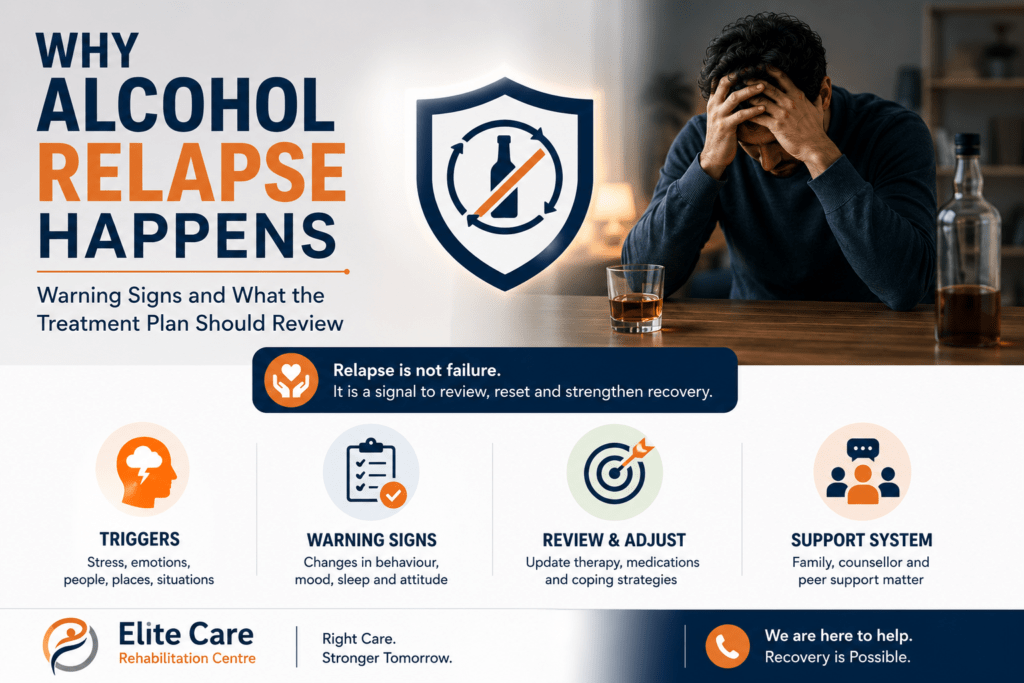
The conditions that lead to alcohol relapse often develop before the first drink. Missed sessions, rising stress, poor sleep, secrecy, renewed contact with drinking companions or growing confidence about controlled drinking may appear first. Families comparing rehabs in Mumbai should ask how a programme identifies these changes and reviews treatment when drinking returns. A useful response is not punishment or shame. It is a prompt to assess safety, understand what happened, strengthen relapse prevention and decide whether the person needs more frequent care, medication review, psychiatric support or another treatment setting.
A return to alcohol can feel like the entire recovery effort has been lost. The patient may feel ashamed, while relatives may react with anger, fear or exhaustion. Those reactions are understandable, but they do not explain why the drinking restarted or what needs to change next.
Alcohol relapse is better treated as clinically important information. It may reveal an unrecognised trigger, untreated depression, weak follow-up, easy access to alcohol, an unrealistic discharge plan or a level of care that no longer matches the patient’s needs.
Why alcohol relapse happens
There is rarely one cause. Drinking may restart after several pressures build quietly over time.
Common alcohol relapse risk factors include:
- Strong cravings that were not disclosed
- Poor or irregular sleep
- Work, financial or relationship stress
- Contact with previous drinking companions
- Alcohol remaining easily available at home
- Untreated depression, anxiety, trauma or another mental-health condition
- Stopping counselling or prescribed treatment
- Overconfidence about controlled drinking
- Family conflict without a plan for managing it
- Leaving residential care without structured follow-up
The NIAAA guidance on understanding relapse notes that returns to drinking are more likely during stress or exposure to people and places connected with earlier alcohol use. It also recommends adjusting the treatment plan after a setback rather than treating it as complete failure.
Understanding the broader pattern of alcohol dependence also helps explain why a sincere decision to stop may not be enough when cravings, withdrawal, learned habits and emotional triggers remain active.
A lapse and a relapse may not look the same
Some clinicians use “lapse” for a brief episode followed by a quick return to the recovery goal, while “relapse” may describe a broader return to the previous drinking pattern. In real life, the boundary is not always clear on the first day.
One drink may remain an isolated event. It may also become several days of drinking, renewed morning alcohol use or another withdrawal cycle. The response should therefore be based on risk rather than on arguing over terminology.
Important questions include:
- How much alcohol was consumed?
- Did drinking continue after the first episode?
- Is the person intoxicated now?
- Were sedatives, opioids or other substances also used?
- Has the person driven or behaved violently?
- Are suicidal thoughts present?
- Could withdrawal develop if drinking stops again?
Alcohol relapse warning signs often appear before drinking
The early signs of alcohol relapse can be behavioural, emotional or practical. Families may notice them before the patient openly reports a craving.
Possible warning signs include:
- Missing counselling or follow-up appointments
- Becoming unusually secretive
- Romanticising earlier drinking
- Arguing that treatment was unnecessary
- Returning to old routes, shops or social groups
- Keeping extra cash without explanation
- Withdrawing from supportive relatives
- Sleeping poorly for several nights
- Becoming increasingly irritable or hopeless
- Keeping alcohol “for guests”
- Testing whether one drink can be controlled
None of these signs proves that drinking has restarted. Their importance increases when several appear together or when they match the person’s previous relapse pattern.
Emotional changes may come first
Relapse during alcohol recovery may begin with a change in mood rather than an obvious plan to drink. The person may feel lonely, resentful, bored, ashamed or exhausted but stop discussing those feelings in treatment.
Stress and alcohol relapse are closely connected because alcohol may once have served as the person’s quickest response to distress. When the old pressure returns and the new coping response is weak, the familiar option can begin to look attractive again.
Watch for changes such as:
- Persistent anger or self-pity
- Loss of interest in recovery activities
- Statements that nothing is improving
- Refusal to discuss cravings
- Increasing isolation
- Neglect of meals, sleep or personal care
- Growing anxiety about work or relationships
These signs should lead to a calm review. Repeated interrogation or public shame may make honest disclosure less likely.
Alcohol cravings and relapse
Cravings can remain after detox because withdrawal treatment does not immediately remove learned associations between alcohol, relief, sleep, celebration and emotional escape.
The earlier article on alcohol cravings after detox explains how internal and external triggers can continue to produce urges during recovery.
A craving does not make drinking inevitable, but risk rises when the urge is intense, alcohol is easily available and nobody knows what is happening. Treatment should make it easier to report a craving before it turns into a purchase or drinking episode.
Why confidence can become a risk
Confidence is useful when it reflects practised coping skills. It becomes risky when the person concludes that treatment is no longer needed or that alcohol can now be controlled without evidence.
Thoughts may include:
- “I have been sober long enough.”
- “I was never as dependent as everyone said.”
- “I can drink only at weddings.”
- “Beer will not cause the same problem.”
- “I know how to stop now.”
The treatment team can examine these beliefs without turning the conversation into an argument. The aim is to compare the thought with the person’s earlier pattern, consequences and previous attempts at controlled drinking.
Why detox alone does not prevent relapse
Detoxification manages withdrawal and physical stabilisation. It does not by itself change every trigger, relationship, thought pattern or mental-health condition connected with alcohol use.
Medically supervised alcohol detox can provide a safer beginning when withdrawal risk is present, but continuing treatment is needed once the acute physical phase settles.
The treatment that follows may include individual counselling, group work, psychiatric review, family sessions, craving management, structured routines and planning for high-risk situations.
Alcohol relapse triggers need to be identified precisely
“Stress” is often too broad to guide a useful plan. The team needs to understand which event occurred, what the patient thought, what emotion followed and how alcohol became available.
A review might find that the episode began with:
- A salary payment followed by unplanned time alone
- An argument and immediate contact with a drinking friend
- Several nights of poor sleep
- A social event without an exit plan
- Stopping psychiatric medicines without review
- Returning to a workplace where alcohol was easily available
- Shame after a mistake, followed by avoidance of counselling
The more specific the sequence becomes, the easier it is to build a practical response.
What to do after alcohol relapse
The first priority is safety, not a detailed debate about blame.
Check whether the person is intoxicated, injured, suicidal, aggressive, driving, mixing alcohol with other substances or likely to face withdrawal after another abrupt stop.
Call 112 in India or go to the nearest emergency department when there is:
- Loss of consciousness
- Breathing difficulty
- A seizure
- Severe confusion or hallucinations
- Suspected overdose or dangerous substance mixing
- Suicidal intent or a recent self-harm attempt
- Violence that cannot be managed safely
- A serious fall, head injury or chest pain
Do not leave a person alone when there is an immediate suicide risk. Do not allow them to drive. Avoid giving unprescribed medicines or trying to manage possible withdrawal with alcohol.
If heavy or regular drinking has resumed, the person should not assume that abruptly stopping again at home is safe. A clinician should assess withdrawal risk, particularly when there is a history of seizures, delirium, hallucinations or severe withdrawal.
Treatment after alcohol relapse starts with an honest reconstruction
Once immediate danger has been addressed, the team should review the period before, during and after the drinking episode.
Useful questions include:
- When did thoughts about drinking first return?
- Which warning signs were present?
- Was a craving reported to anyone?
- Which treatment sessions were missed?
- What was happening with sleep and mood?
- How was alcohol obtained?
- Who was present?
- What happened after the first drink?
- What stopped the episode or brought the patient back to care?
The purpose is not to conduct an interrogation. It is to find the points where a different action could have changed the outcome.
What an alcohol treatment plan review should cover
An alcohol treatment plan review should examine more than whether the patient followed instructions. The plan itself may have been too vague, too difficult to access or no longer appropriate.
Current drinking and withdrawal risk
The team needs to establish whether drinking was brief or has returned to a regular pattern. A new withdrawal assessment may be required when alcohol is stopped again.
Cravings and access to alcohol
The review should identify when urges became stronger and whether alcohol was available at home, work or through friends.
Mental health
Depression, anxiety, trauma, psychosis, grief and suicidal thoughts can change the level and type of care needed.
Medication
Clinicians should check whether prescribed treatment was taken, stopped, mixed with alcohol or causing problems. Any change requires proper medical review.
Treatment engagement
Missed appointments may reflect avoidance, poor motivation, transport difficulties, work pressure, family conflict or a programme that did not fit the patient’s needs.
Home and social environment
The plan should consider drinking within the household, pressure from friends, availability of money, unsafe relationships and long periods without structure.
Level of care
A patient who was stable with occasional follow-up may now need more frequent sessions, structured day treatment, residential care or another clinically suitable arrangement.
The relapse prevention plan should become more specific
A relapse prevention plan is useful only when the patient can follow it during a difficult moment.
It should identify:
- The patient’s highest-risk people, places and emotions
- Personal warning signs
- Who will be contacted first
- Where the patient can go when alcohol is nearby
- How appointments will be maintained
- What family members should do when risk rises
- Which symptoms require urgent medical help
- How the team will respond if drinking restarts
General instructions such as “stay strong” or “avoid bad company” are not enough. The plan needs names, timings, practical alternatives and a clear response to foreseeable difficulties.
Alcohol relapse prevention may require a different level of support
Alcohol relapse prevention does not always mean repeating the same programme more firmly. The return to drinking may show that treatment intensity, timing or content needs to change.
Possible adjustments include:
- More frequent counselling
- Psychiatric reassessment
- Review of prescribed treatment for alcohol use disorder
- Residential rehabilitation
- Greater structure during evenings or weekends
- Family sessions
- Support for co-occurring depression or anxiety
- Planning around work, money or social events
- Peer or mutual-support involvement
NIAAA describes recovery as a long-term process in which the first year may include both gains and setbacks. Its guidance on supporting recovery emphasises continuing support rather than assuming that one difficult episode defines the final outcome.
A recovery plan after relapse should match the real problem
A recovery plan after relapse may fail again if it addresses only the last drink. It should also address the circumstances that made drinking more likely.
For example:
- Poor sleep may require a medical and behavioural sleep review.
- Depression may require psychiatric assessment and closer safety monitoring.
- Repeated access to alcohol at work may require a practical employment plan.
- Family conflict may require boundaries and structured family sessions.
- Social pressure may require rehearsed refusal skills and an exit arrangement.
- Long unstructured evenings may require planned activity and contact.
The plan should be realistic enough to use outside the protected treatment environment.
The role of family after a return to drinking
Families can support treatment without humiliating, threatening or monitoring the patient every minute.
Helpful actions include:
- Checking immediate safety
- Contacting the treatment team early
- Providing accurate information about the episode
- Removing alcohol from shared spaces
- Maintaining boundaries around violence and unsafe driving
- Supporting appointments and family sessions
- Following an agreed crisis plan
Where money has repeatedly been used to buy alcohol, any temporary arrangement involving cash or payment access should be discussed with the patient and handled through an agreed plan rather than imposed as punishment.
Helpful support does not mean covering up repeated absences, lying to employers, paying alcohol-related debts without limits or accepting abuse within the home.
Why shame can increase risk
Shame often drives secrecy. A patient who expects humiliation may hide cravings, avoid appointments or deny that drinking has restarted.
Accountability still matters. The person needs to discuss what happened, accept consequences and participate in the revised plan. That can be done without describing them as hopeless or dishonest in every area of life.
The earlier alcohol use disorder assessment article explains why severity and treatment needs are judged from the wider pattern rather than from one label or one promise.
What if the patient refuses to return to treatment?
Choose a time when the person is sober enough to understand the conversation. Use specific observations rather than broad accusations.
A relative might say:
“You have started missing work, drinking in the morning and hiding bottles again. We are worried about your safety and want the treatment team to reassess the plan today.”
Set clear limits around driving, violence, money and alcohol in shared spaces. Avoid making threats that the family cannot or will not follow.
Emergency help is needed when refusal is accompanied by suicidal intent, severe intoxication, psychosis, seizures, dangerous withdrawal, loss of consciousness or violence that cannot be managed safely.
Relapse does not erase earlier progress
A return to drinking can have serious consequences and should never be minimised. It also does not mean that every skill, alcohol-free day or improvement has disappeared.
The clinical value lies in identifying what held up, what failed and what needs reinforcement. One patient may have called for help after the first drink instead of continuing for several weeks. Another may have returned to care before withdrawal became severe. These are important differences.
Recovery can remain possible even when progress is uneven. NIAAA cites a nationally representative study of nearly 7,800 people who had experienced alcohol use disorder at least a year earlier. More than half reported no alcohol use disorder symptoms, apart from craving, during the previous 12 months. This is US evidence rather than an Indian recovery estimate, but it challenges the belief that a relapse or setback makes lasting improvement impossible.
Questions the treatment team should ask
Treatment after alcohol relapse should produce clear answers to questions such as:
- What changed before the drinking restarted?
- Which alcohol relapse warning signs were missed?
- Was the patient able to contact support quickly?
- Did the treatment schedule match the period of highest risk?
- Are depression, anxiety or trauma being treated?
- Does the home environment support recovery?
- Does the patient need another detox assessment?
- Should treatment intensity increase?
- What will the family do differently?
- How will the revised plan be tested before discharge?
Frequently asked questions
Is one drink always an alcohol relapse?
Terminology varies. Some professionals may call a brief episode a lapse and reserve relapse for a broader return to the earlier pattern. Regardless of the label, drinking after an abstinence goal should prompt an early safety and treatment review.
What are the early signs of alcohol relapse?
Common signs include missed treatment, secrecy, poor sleep, renewed contact with drinking companions, romanticising alcohol, increased isolation and growing confidence that controlled drinking is possible.
Why does alcohol relapse happen after successful rehabilitation?
Rehabilitation can build strong recovery skills, but later stress, cravings, mental-health symptoms, social exposure or reduced follow-up can increase risk. The treatment plan needs to adapt as circumstances change.
What should families do immediately after drinking restarts?
Check for intoxication, injury, suicidal thoughts, violence, unsafe driving, other substances and possible withdrawal risk. Contact the treatment team promptly and seek emergency care when severe symptoms are present.
Can a person recover after several relapses?
Yes. Repeated episodes indicate that the plan needs a deeper review, a different level of care or stronger treatment for underlying triggers. They do not prove that recovery is impossible.
What should an alcohol treatment plan review change?
It may change treatment frequency, level of care, craving management, psychiatric support, medication review, family involvement, follow-up arrangements and the response to specific triggers.
How does alcohol relapse prevention work?
It combines trigger identification, coping practice, treatment attendance, mental-health care, family boundaries, reduced alcohol access and a clear plan for responding when risk rises.
Does relapse mean residential rehabilitation is required?
Not automatically. The decision depends on drinking severity, withdrawal risk, safety, previous treatment response, mental health, home support and whether a less intensive setting can provide adequate care.
The treatment plan should become clearer after relapse
Alcohol relapse is a serious event, but the response should produce more than guilt and another promise to stop.
A useful alcohol treatment plan review reconstructs the sequence, identifies missed warning signs, assesses safety and decides whether the current level of support remains suitable. The revised plan should state what the patient, family and treatment team will do when cravings, stress or secrecy return.
When the episode leads to earlier disclosure, more precise planning and treatment that matches the patient’s actual risks, it can become a turning point rather than the end of recovery.
Medical disclaimer: This article provides general educational information and does not replace individual medical assessment, diagnosis or treatment. Call 112 in India or go to the nearest emergency department for seizures, severe confusion, hallucinations, loss of consciousness, breathing difficulty, suspected overdose, suicidal intent, a recent self-harm attempt, serious injury or violent behaviour that cannot be managed safely.
