
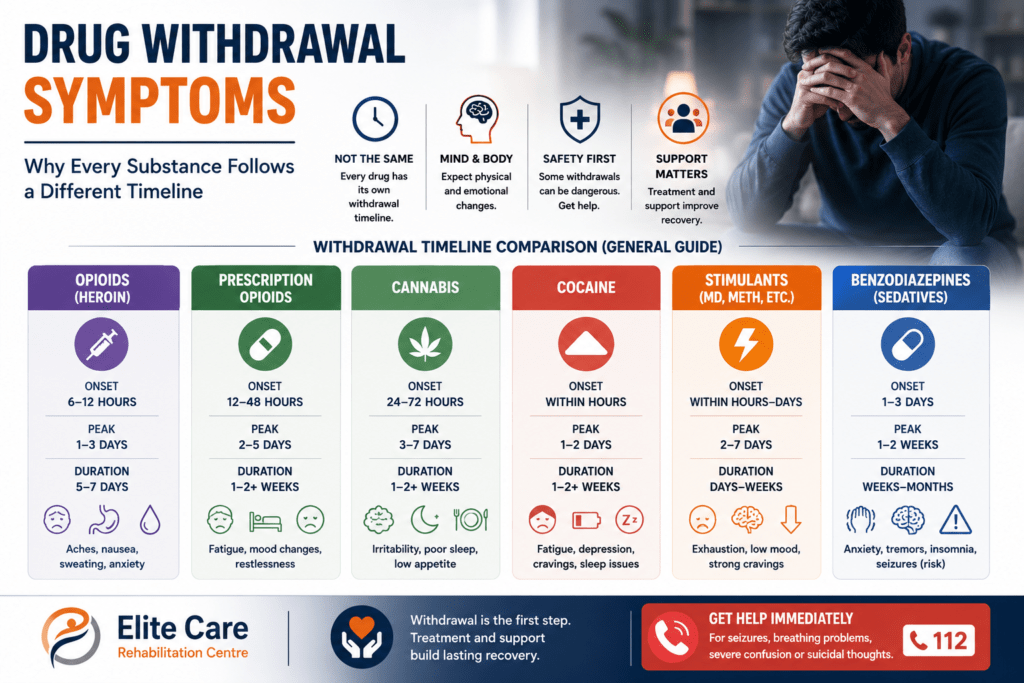
Drug withdrawal symptoms do not follow one universal clock. A person stopping heroin may become unwell within hours, while withdrawal from a long-acting opioid or sedative may begin later and continue for longer. Families contacting a drug rehabilitation centre in Mumbai should therefore avoid relying on a fixed three-day, seven-day or ten-day detox promise. The substance, amount, frequency, duration, last dose, physical health and use of other drugs can all change when symptoms begin, when they become strongest and how safely they can be managed.
Withdrawal can involve physical symptoms such as sweating, vomiting, diarrhoea, pain, shaking and disturbed sleep. It can also cause depression, anxiety, irritability, cravings, paranoia or suicidal thoughts. Some syndromes are mainly distressing, while others may cause seizures, delirium or another medical emergency.
The central point is simple: there is no single drug withdrawal timeline that applies to heroin, cannabis, cocaine, stimulant drugs, sedatives, prescription medicines and combinations of substances.
How long does drug withdrawal last?
The acute withdrawal phase may last from several days to several weeks, depending on the substance and pattern of use. Sleep disturbance, mood changes, anxiety, concentration problems or cravings may continue for longer in some people.
The most intense physical phase can settle while sleep disturbance, low mood, anxiety, poor concentration or cravings continue. These longer symptoms do not necessarily mean that acute withdrawal is still occurring, but they can interfere with recovery and increase the risk of returning to use.
A useful answer to “how long does drug withdrawal last?” must therefore include three separate questions:
- When are symptoms likely to begin?
- When might they become most intense?
- Which symptoms may continue after the acute phase?
The WHO withdrawal-management guidance hosted on NCBI Bookshelf describes broad withdrawal patterns for opioids, stimulants and cannabis. It also shows why a timeline should be treated as an estimate rather than a guaranteed schedule.
Drug withdrawal timeline comparison
The following table provides broad clinical patterns. It should not be used to decide that home detox is safe or to predict an exact finishing date.
| Substance | Possible onset | Common acute pattern | Main safety concern |
|---|---|---|---|
| Heroin and other short-acting opioids | Often within several hours to one day | Symptoms may become strongest over the next two to three days and improve over approximately one week | Dehydration, severe distress and overdose after reduced tolerance |
| Long-acting opioids, including some prescription formulations | May begin later than heroin withdrawal | Symptoms may develop more gradually and continue for one to two weeks or longer | Return to use, overdose risk and unsafe abrupt changes to prescribed treatment |
| Cannabis | Often within one or two days | Sleep, mood and appetite symptoms may be strongest during the first week and continue for one to two weeks or longer | Severe anxiety, psychosis, suicidal thoughts or rapid return to use |
| Cocaine | A crash may begin within hours | Exhaustion and increased sleep may occur first; depression, cravings and disturbed sleep can continue | Severe depression, psychosis, impulsivity or suicide risk |
| Methamphetamine and other stimulants | Within hours to several days | Severe tiredness and mood symptoms may last several days, with milder symptoms continuing for weeks | Depression, paranoia, hallucinations, agitation and self-harm risk |
| Benzodiazepines and certain sedatives | Within hours or after several days, depending on the medicine | The course may be prolonged and cannot be predicted safely without knowing the drug and dose | Seizures, delirium, severe confusion and medical instability |
| Several substances together | Different syndromes may begin at different times | Symptoms can overlap, hide one another or change unexpectedly | Missed sedative or alcohol withdrawal, breathing problems, psychiatric crisis and dehydration |
These different drug withdrawal timelines are only broad guides. The actual course may be shorter, longer, milder or more severe.
Why every substance follows a different timeline
The timing of substance withdrawal symptoms is influenced by how quickly the drug leaves the body and how the brain and body have adapted to repeated exposure.
Important factors include:
- Whether the substance is short-acting or long-acting
- The amount usually taken
- How often it was used
- How long regular use continued
- Whether doses increased over time
- How the substance was taken
- The time of the last dose
- Use of alcohol, medicines or other drugs
- Liver and kidney function
- Pregnancy, age and physical illness
- Previous withdrawal, seizures or delirium
- The treatment provided during withdrawal
Two people reporting the same street drug can therefore experience different timelines. One product may also contain a different substance, strength or combination from what the person expected.
The earlier guide to the types of drug addiction explains why the drug class changes intoxication, overdose and treatment. Withdrawal timing is another important difference.
When do drug withdrawal symptoms begin?
Symptoms usually begin after the level of a regularly used substance starts falling. The timing depends heavily on the drug’s duration of action.
Withdrawal from a short-acting opioid such as heroin may become noticeable within hours. A long-acting opioid or sedative can produce a delayed beginning, creating a false sense that the person is safe because they initially appear well.
Other factors can confuse the onset:
- The person may have taken an unknown final dose.
- Another substance may temporarily hide withdrawal symptoms.
- Intoxication may still be present.
- A prescribed long-acting medicine may remain active.
- Vomiting, anxiety or poor sleep may be blamed on another illness.
- The person may minimise symptoms to avoid treatment.
A quiet first day does not prove that severe withdrawal will not develop later, particularly after regular sedative use or use of several substances.
Opioid withdrawal symptoms and timeline
Opioids include heroin, opium, certain prescription pain medicines and synthetic opioids. Although their withdrawal symptoms overlap, the timing differs between short-acting and long-acting drugs.
Common opioid withdrawal symptoms include:
- Yawning
- Runny nose and watery eyes
- Sweating
- Restlessness and anxiety
- Dilated pupils
- Goosebumps
- Muscle and joint pain
- Abdominal cramps
- Nausea or vomiting
- Diarrhoea
- Insomnia
- Strong cravings
Opioid withdrawal is often intensely distressing. It does not usually carry the same seizure or delirium risk as abrupt withdrawal from certain sedatives, but that does not make it harmless.
Dehydration, pregnancy, serious physical illness, severe psychological distress and rapid return to opioid use can create substantial danger.
Heroin withdrawal symptoms
Heroin is generally shorter-acting than medicines such as methadone. Heroin withdrawal symptoms may therefore begin within several hours to approximately one day after the last use.
Symptoms often become more intense over the following two or three days. The acute physical phase may improve over approximately one week, although sleep problems, low mood and cravings can continue.
This is an indicative heroin withdrawal pattern, not a guaranteed countdown. The actual timing depends on the amount used, frequency, purity, route and other substances.
Prescription opioid withdrawal timeline
There is no single prescription opioid withdrawal timeline because prescription opioids do not all remain active for the same length of time.
Withdrawal from a shorter-acting pain medicine may begin sooner and settle earlier. Long-acting preparations may produce a later, more gradual and longer course.
A person taking opioids for pain can become physically dependent even when the medicine has been used as prescribed. Physical dependence means the body has adapted and may develop withdrawal after an abrupt reduction. It does not automatically establish addiction.
Patients should not suddenly stop or substantially reduce a prescribed opioid without discussing the plan with the prescriber, particularly after regular or prolonged use.
Why opioid detox does not complete treatment
Withdrawal management can reduce immediate discomfort, but it does not by itself treat opioid use disorder. Cravings, triggers and reduced tolerance remain important after the acute symptoms settle.
Reduced tolerance means that returning to an amount used before detox can cause a fatal overdose.
The CDC guidance on opioid use disorder treatment states that detoxification alone is not recommended for opioid use disorder because renewed use, overdose and overdose-death risks remain. Treatment should include assessment for evidence-based medication, overdose prevention and continuing care.
A decision not to participate in counselling should not automatically delay evidence-based medication for opioid use disorder.
Cannabis withdrawal symptoms and timeline
Cannabis can cause withdrawal after frequent or prolonged use. The symptoms are usually different from opioid or sedative withdrawal.
Common cannabis withdrawal symptoms include:
- Irritability
- Anxiety
- Restlessness
- Disturbed sleep
- Vivid or unpleasant dreams
- Reduced appetite
- Low mood
- Headache
- Sweating
- Stomach discomfort
- Cravings
Cannabis withdrawal timeline
A cannabis withdrawal timeline commonly begins within one or two days after frequent use stops. Symptoms may become strongest during the first several days and gradually improve over one to two weeks.
Sleep disruption, unusual dreams, irritability or cravings may continue for longer in some people, particularly after heavy daily use.
Cannabis withdrawal is not usually associated with the seizure or delirium risk seen with withdrawal from certain sedatives. It can still be difficult enough to disrupt work, treatment participation and family functioning.
Severe panic, psychosis, suicidal thoughts or an inability to function safely require clinical assessment rather than being dismissed as an expected part of cannabis detox.
Cocaine crash and withdrawal
The first period after cocaine use is often described as a crash. This may begin soon after a binge ends because cocaine’s noticeable stimulant effects can wear off quickly.
Possible cocaine withdrawal symptoms include:
- Profound tiredness
- Increased sleep or disturbed sleep
- Increased appetite
- Low mood
- Irritability
- Anxiety
- Reduced motivation
- Difficulty concentrating
- Vivid dreams
- Strong cravings
- Suicidal thoughts
What is the cocaine crash timeline?
The cocaine crash timeline may begin within hours after the last use. Exhaustion, increased sleep, low energy and low mood can be prominent during the first day or two.
The wider withdrawal phase may continue for several days. Less intense symptoms such as depression, anxiety, poor concentration, disturbed sleep and cravings can remain for one to three weeks or longer.
There is no exact dividing line between the crash and later withdrawal. The pattern is also affected by how long the binge lasted, the amount used and whether the person used alcohol, sedatives, cannabis or opioids afterwards.
Why cocaine withdrawal can still become dangerous
Cocaine withdrawal does not usually cause the same seizure or delirium syndrome associated with abrupt sedative withdrawal. Its psychiatric risks can nevertheless be serious.
Severe depression, paranoia, hallucinations, impulsive behaviour and suicidal thoughts require urgent assessment. A person with immediate suicide risk should not be left alone while emergency help is arranged.
Stimulant withdrawal symptoms
Stimulants include methamphetamine, amphetamine-type drugs, mephedrone, cocaine and misused prescription stimulants. Their withdrawal patterns share features, but they are not identical.
Stimulant withdrawal symptoms can include:
- Extreme tiredness
- Increased sleep or inability to sleep properly
- Depressed mood
- Anxiety
- Irritability
- Agitation
- Increased appetite
- Slow thinking or movement
- Difficulty concentrating
- Vivid dreams
- Cravings
A person who has remained awake for several days may initially sleep for a prolonged period. Another may remain restless, suspicious or unable to settle despite stopping the stimulant.
The SAMHSA guidance on stimulant use disorders describes an early withdrawal period followed by possible continuing fatigue, mood disturbance, sleep changes and cravings.
How long does stimulant withdrawal last?
The first severe phase may last several days. Less intense depression, anxiety, lethargy, irregular sleep and cravings can continue for one to three weeks or longer.
Repeated high-dose methamphetamine or other stimulant use can also be followed by paranoia, hallucinations or disordered thinking. These symptoms may continue after the last dose and require psychiatric assessment.
Call 112 or go to the nearest emergency department for severe agitation, hallucinations, violent behaviour that cannot be managed safely, chest pain, collapse, seizures, very high body temperature, suicidal intent or loss of consciousness.
Benzodiazepine and sedative withdrawal symptoms
Sedatives include benzodiazepines, barbiturates and certain sleeping or anti-anxiety medicines. Regular use can produce physical dependence, including when a medicine was initially prescribed appropriately.
Possible benzodiazepine withdrawal symptoms include:
- Severe anxiety or panic
- Insomnia
- Tremor
- Sweating
- Nausea
- Increased sensitivity to light or sound
- Agitation
- Muscle pain or stiffness
- Confusion
- Hallucinations
- Seizures
- Delirium
Why the sedative timeline is difficult to predict
A short-acting sedative may produce earlier symptoms. A long-acting medicine can delay the beginning of withdrawal for one or more days.
The course can also be affected by dose, duration, age, liver function, other medicines and previous attempts to stop. Some symptoms may continue for weeks or longer.
For this reason, the absence of symptoms immediately after the last tablet does not establish that abrupt discontinuation is safe.
The ASAM benzodiazepine-tapering guideline advises that people likely to be physically dependent should not abruptly discontinue benzodiazepines. A gradual, individualised taper under clinical supervision may be required.
Families should not create a tapering schedule, divide medicines inconsistently or replace one sedative with another without guidance from a qualified prescriber.
Prescription medicine withdrawal does not automatically mean addiction
Physical dependence and addiction are related but different concepts.
A patient may develop withdrawal after correctly taking an opioid, benzodiazepine, sleeping medicine or another dependence-forming medicine. This means the body has adapted to regular exposure.
Addiction additionally involves a pattern such as impaired control, compulsive use or continued use despite harm.
Warning signs of possible misuse may include:
- Taking larger or more frequent doses than directed
- Using another person’s prescription
- Running out of medicine repeatedly
- Seeking additional supplies without coordinated medical care
- Combining medicines with alcohol or illicit drugs
- Using the medicine primarily for intoxication
- Continuing despite overdose, falls, memory problems or other harm
Withdrawal after prescribed treatment still requires careful management. It should not be used by itself to accuse a patient of addiction.
Multiple substance withdrawal symptoms
Multiple-substance use can make withdrawal harder to recognise and substantially less predictable.
Examples include:
- Heroin used with sleeping pills
- Prescription opioids combined with benzodiazepines
- Cocaine followed by sedatives to sleep
- Methamphetamine combined with cannabis
- Prescription medicines used alongside alcohol
- Unknown powders or tablets containing several drugs
Multiple substance withdrawal symptoms may begin at different times. Extreme tiredness from stimulant withdrawal can occur while dangerous sedative or alcohol withdrawal is developing. Sedation from one substance can temporarily hide agitation or tremor caused by another.
A person may therefore move between drowsiness, anxiety, sweating, vomiting, poor balance, paranoia and confusion.
Families should provide the clinical team with information about every known drug, prescribed medicine and alcohol use. Focusing only on the substance the person considers their “main drug” can miss an important risk.
Which drug withdrawals are dangerous?
Understanding which withdrawals can become medically dangerous is especially important before anyone attempts to stop at home.
Withdrawal can become medically dangerous with:
- Benzodiazepines
- Barbiturates and certain other sedatives
- Alcohol when it is part of the pattern
- Several substances stopped together
When the contents of a regularly used tablet or powder are unknown, the withdrawal risk is also uncertain. Clinicians may need to consider possible sedatives, opioids or multiple substances until more reliable information is available.
Possible complications include seizures, delirium, severe confusion, unstable physical signs and dangerous agitation.
Other withdrawals may not usually produce the same seizure or delirium risk but can still create serious danger through:
- Vomiting, diarrhoea and dehydration
- Severe depression or suicidal thoughts
- Psychosis or hallucinations
- Pregnancy complications
- Serious physical illness
- Rapid return to use
- Overdose after reduced opioid tolerance
“Usually not life-threatening” should never be interpreted as “safe to manage alone”.
Why a home detox timeline can be misleading
A family may expect symptoms to begin and finish according to a timetable found online. This can lead to dangerous reassurance when the person appears well during the first few hours.
Home monitoring may miss:
- Delayed sedative withdrawal
- Use of an undisclosed substance
- A counterfeit or unusually potent product
- Overlapping alcohol withdrawal
- Dehydration
- Changes in blood pressure, pulse or temperature
- Psychosis or suicide risk
- Medical illness mistaken for withdrawal
Withdrawal risk should be assessed before a person is advised to stop abruptly, especially when sedatives, several substances, pregnancy, seizures, delirium or serious illness are involved.
The earlier article on drug addiction symptoms explains how intoxication, withdrawal, addiction and overdose can appear similar but require different responses.
What happens during a withdrawal assessment?
A clinical assessment may review:
- The substances used
- Street names and possible uncertainty about contents
- Amount and frequency
- How each substance was taken
- Time of the last dose
- Prescribed and non-prescribed medicines
- Alcohol use
- Previous withdrawal, seizures or delirium
- Previous overdose
- Pregnancy where relevant
- Liver, kidney, heart or neurological illness
- Current mood, behaviour and suicide risk
- Breathing, awareness, pulse, temperature and hydration
Clinicians may use a structured withdrawal scale for certain substances, but a score does not replace history, examination and continuing observation.
A urine or blood test can sometimes support the assessment. It may not identify every synthetic substance, prove when the drug was used or predict exactly how long withdrawal will last.
What treatment for withdrawal may involve
Treatment depends on the substance and the level of risk. It may include:
- Observation and repeated assessment
- Hydration and nutrition support
- Management of vomiting, diarrhoea, pain or disturbed sleep
- A clinically supervised medicine plan
- Psychiatric assessment
- Suicide-risk monitoring
- Treatment of injuries or physical illness
- Planning for cravings and return-to-use risk
- Transfer to an emergency or hospital setting when required
The appropriate setting may be outpatient, residential or hospital-based. The decision should reflect the substance, withdrawal history, medical condition, mental state, home environment and available supervision.
The wider addiction treatment process begins with assessment and continues beyond the immediate physical phase.
Acute and longer-lasting withdrawal symptoms
Acute withdrawal refers to the more immediate symptoms after regular substance use is reduced or stopped. The acute phase may include sweating, vomiting, diarrhoea, pain, shaking, exhaustion, agitation or disturbed sleep.
Some people experience continuing symptoms after the most obvious physical phase settles. These may include:
- Cravings
- Low mood
- Anxiety
- Poor concentration
- Reduced energy
- Irregular sleep
- Vivid dreams
- Difficulty experiencing pleasure
- Emotional instability
These symptoms do not follow a precise schedule. They can also result from depression, trauma, sleep deprivation, physical illness or another untreated mental-health condition.
A continuing symptom should therefore be assessed rather than automatically labelled as prolonged withdrawal.
Why detox is not the same as rehabilitation
Detoxification manages intoxication, acute withdrawal and immediate physical safety. It does not automatically change cravings, access to drugs, relationships, trauma, psychiatric illness or learned behaviour.
A person may complete the most visible withdrawal phase and still remain at high risk of returning to use.
The distinction between detox and rehabilitation is especially important after opioid withdrawal because tolerance may fall before cravings and triggers have been adequately addressed.
Continuing care may involve behavioural treatment, psychiatric support, family work, medication where appropriate, relapse-prevention planning and follow-up after discharge.
How families can support someone during withdrawal
Families can help by giving clinicians accurate information and responding early when symptoms change.
Useful actions include:
- Record known substances and prescribed medicines.
- Share the approximate time of the last use.
- Report previous seizures, delirium, overdose or severe withdrawal.
- Keep available packaging without unnecessarily handling unknown powders.
- Watch for changes in breathing, awareness and behaviour.
- Prevent driving while intoxicated or severely unwell.
- Follow the treatment team’s instructions.
Families should not:
- Give alcohol or another drug to control withdrawal.
- Give borrowed sleeping pills or sedatives.
- Create a medicine-tapering schedule at home.
- Force food, fluids or tablets into an unconscious person’s mouth.
- Lock a person alone in a room during possible withdrawal.
- Assume that prolonged sleep is always harmless.
Relatives should not attempt to physically restrain a severely agitated, intoxicated or psychotic person unless it is immediately necessary to prevent serious harm and no safer option is available. Move other people to safety, avoid confrontation and call 112 when the behaviour cannot be managed safely.
When drug withdrawal becomes an emergency
Call 112 in India or go to the nearest emergency department when there is:
- A seizure
- Severe confusion or delirium
- Hallucinations with unsafe behaviour
- Slow, irregular or absent breathing
- Inability to wake the person
- Blue or grey lips or fingertips
- Severe chest pain
- Collapse
- Very high body temperature
- Repeated vomiting with inability to keep fluids down
- Signs of serious dehydration
- Suicidal intent or a recent self-harm attempt
- Extreme agitation or violence that cannot be managed safely
Do not wait for a fixed timeline to finish when the person is becoming medically or psychiatrically unstable.
Frequently asked questions
Is there one standard drug withdrawal timeline?
No. The onset, peak and duration depend on the substance, whether it is short-acting or long-acting, the pattern of use, other substances and individual health factors.
When do drug withdrawal symptoms usually begin?
Some symptoms begin within hours, while withdrawal from long-acting opioids or sedatives may be delayed for one or more days. A symptom-free first day does not guarantee that later withdrawal will be mild.
How long does drug withdrawal last?
The acute phase may last several days or longer. Sleep problems, low mood, anxiety, poor concentration and cravings can continue for weeks or longer in some people.
How long does opioid withdrawal last?
Short-acting opioid withdrawal may begin within hours and improve over approximately one week. Long-acting opioids may produce a later and longer course. The timeline varies and should not replace clinical assessment.
What are common heroin withdrawal symptoms?
They include yawning, watery eyes, a runny nose, sweating, dilated pupils, restlessness, muscle pain, abdominal cramps, vomiting, diarrhoea, insomnia and cravings.
Can cannabis cause withdrawal?
Yes. Frequent cannabis use can be followed by irritability, anxiety, disturbed sleep, vivid dreams, reduced appetite, restlessness, low mood and cravings when use stops.
What is the difference between a cocaine crash and withdrawal?
The crash is the early period of exhaustion, increased sleep and low mood after stimulant effects wear off. Depression, sleep disturbance, poor concentration and cravings may continue during the wider withdrawal period.
Which drug withdrawal is most dangerous?
Withdrawal from benzodiazepines, barbiturates, certain other sedatives and alcohol can cause seizures or delirium. Multiple-substance withdrawal can also become dangerous because several syndromes may overlap.
Can prescription pills cause dangerous withdrawal?
Yes. Abruptly stopping certain sedatives can cause seizures or delirium. Prescription opioids can also cause severe withdrawal, while reduced tolerance increases overdose risk after a return to use.
Does withdrawal prove that someone has an addiction?
No. Physical dependence and withdrawal can develop during appropriate prescribed treatment. Addiction additionally involves impaired control, compulsive use or continued use despite harm.
Can several drugs cause withdrawal at the same time?
Yes. Different symptoms may begin at different times, and one substance can hide or alter another withdrawal syndrome. Complete disclosure and clinical monitoring are especially important.
Is home detox safe when the symptoms appear mild?
Mild early symptoms do not guarantee a mild course. Professional assessment is particularly important after regular sedative use, multiple-substance use, previous seizures or delirium, pregnancy, serious illness or severe psychiatric symptoms.
There is no universal withdrawal clock
Drug withdrawal symptoms differ because heroin, prescription opioids, cannabis, cocaine, other stimulants and sedatives do not act or leave the body in the same way.
A reliable plan does not promise that every person will complete withdrawal within a fixed number of days. It identifies the substance, estimates the likely timeline, monitors changing symptoms and prepares for complications that require a different level of care.
Understanding different drug withdrawal timelines also helps families avoid two dangerous assumptions: that severe discomfort always means a life-threatening withdrawal, or that a person who looks comfortable during the first day is automatically safe.
Assessment, observation and substance-specific treatment are more dependable than a standard detox calendar.
Medical disclaimer: This article provides general educational information and does not replace individual medical assessment, diagnosis or treatment. Call 112 in India or go to the nearest emergency department for seizures, severe confusion, hallucinations, slow or absent breathing, inability to wake, severe chest pain, collapse, very high body temperature, serious dehydration, suspected overdose, suicidal intent, serious injury or violent behaviour that cannot be managed safely.
