
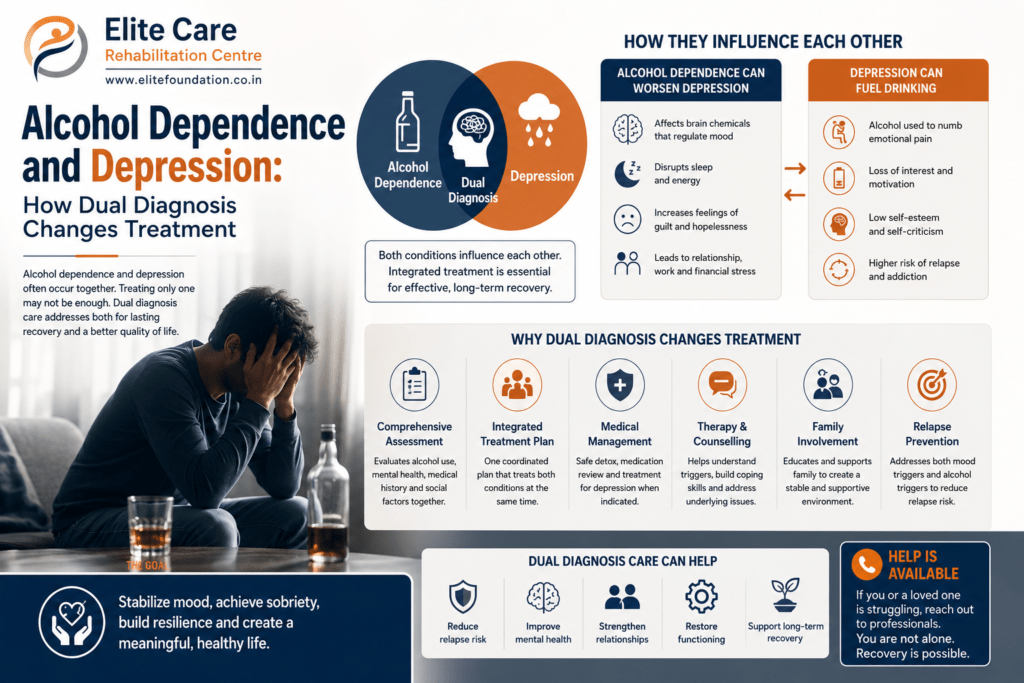
Alcohol dependence and depression often appear together, but the relationship is not always straightforward. A person may drink to numb sadness, while alcohol can deepen low mood, disturb sleep and increase impulsive behaviour. Families searching for the top-rated alcohol rehabilitation centre in Mumbai need more than detox alone when both conditions are present. Early psychiatric assessment, supervised withdrawal care and dual diagnosis treatment can help separate alcohol-related symptoms from an independent depressive disorder and create one coordinated plan for safety, recovery and relapse prevention.
At first, the family may see only one problem. Some relatives focus on the drinking because it is visible. Others believe depression is the real cause and expect alcohol use to stop once the person feels better. In practice, either condition can worsen the other, and treatment becomes less effective when one side is ignored.
A dual diagnosis changes the questions asked at admission, the way withdrawal is monitored, the timing of psychological care, the level of suicide-risk assessment and the plan made for discharge. It also changes how progress is judged. Fewer drinks do not necessarily mean that mood has stabilised, and a temporary improvement in mood does not confirm that alcohol dependence has resolved.
What does dual diagnosis mean?
Dual diagnosis is a commonly used term for the presence of a substance use disorder and a mental-health disorder in the same person. Clinicians may also use the term co-occurring disorders. In this article, the focus is co-occurring alcohol use disorder and depression.
The two conditions do not need to begin at the same time. Depression may have been present years before heavy drinking developed. In another patient, repeated alcohol use may contribute to depressive symptoms. Some people have shared biological, psychological or social vulnerabilities that increase the likelihood of both.
In cases involving alcohol addiction and depression, neither condition should be treated as a minor side issue. The clinical team needs to understand how mood, drinking, withdrawal and daily functioning affect one another.
SAMHSA describes co-occurring disorders as the coexistence of a mental disorder and a substance use disorder. This matters because treatment for co-occurring disorders should address both conditions rather than moving the patient between separate plans that do not communicate with each other.
The overlap is substantial. Evidence summarised by NIAAA indicates that among people with major depressive disorder, the co-occurrence of alcohol use disorder ranges from 27% to 40% across the lifetime and reaches up to 22% within a 12-month period. These are international estimates rather than India-specific prevalence figures, but they show why screening for both conditions is important.
The earlier explanation of alcohol dependence describes how drinking can become difficult to control despite physical, emotional, family and work-related consequences.
How alcohol dependence and depression influence each other
The connection can run in both directions.
A person with persistent sadness, guilt, loneliness or hopelessness may discover that alcohol briefly dulls those feelings. That short period of relief can make drinking feel useful. With repetition, alcohol becomes the usual response to emotional pain.
Yet alcohol can also worsen the very problems it appears to relieve. Sleep becomes less restorative, arguments increase, work suffers and shame grows. Intoxication may lead to impulsive decisions, while withdrawal can bring anxiety, agitation and low mood. The result is a cycle in which alcohol addiction and depression reinforce each other.
This cycle is not a character weakness. It is a clinical pattern that requires careful assessment. The NIAAA guidance on alcohol use disorder and co-occurring conditions explains that alcohol use disorder frequently appears alongside depressive and other psychiatric conditions. Either condition may develop first.
Why diagnosis is not always simple
Low mood during heavy drinking does not automatically establish an independent depressive disorder. At the same time, it should never be dismissed as “only because of alcohol” without assessment.
Several possibilities may need to be considered:
- Depression began before harmful drinking.
- Alcohol use worsened an existing depressive disorder.
- Depressive symptoms developed during prolonged heavy drinking.
- Low mood appeared during intoxication or withdrawal.
- Sleep loss, nutritional problems or physical illness are contributing.
- Bipolar disorder, trauma, anxiety or another condition is being mistaken for depression.
- More than one explanation is present.
The phrase alcohol-induced depression is sometimes used when depressive symptoms are closely connected with alcohol intoxication, withdrawal or prolonged use. A clinician may need to observe how symptoms change with abstinence, but immediate safety concerns and severe symptoms still require treatment without delay.
Depression during alcohol withdrawal
Depression during alcohol withdrawal can include sadness, irritability, poor concentration, guilt, anxiety, exhaustion and disturbed sleep. These symptoms may be part of the withdrawal period, but they can also reveal an underlying mood disorder that was previously masked by drinking.
The timing of symptoms provides useful information. Clinicians ask whether low mood was present during earlier alcohol-free periods, whether there have been previous episodes unrelated to drinking and whether the person has ever experienced periods of unusually elevated mood, reduced need for sleep or risky behaviour.
The alcohol withdrawal timeline helps families understand why mood and behaviour can change after alcohol is stopped. It cannot by itself determine whether the patient has a separate depressive disorder.
Signs of depression in alcohol dependence
The signs of depression in alcohol dependence may be hidden by intoxication, withdrawal or the social consequences of drinking. A person may not say, “I feel depressed.” Instead, relatives may notice withdrawal from family life, loss of interest, neglect of work, persistent guilt or a belief that nothing will improve.
Possible signs include:
- Low mood that continues for much of the day
- Loss of interest in previously valued activities
- Marked hopelessness or guilt
- Changes in sleep or appetite
- Low energy and slowed behaviour
- Poor concentration and indecision
- Social withdrawal
- Statements about being a burden
- Neglect of personal care
- Thoughts of death, self-harm or suicide
Some of these features overlap with alcohol-related problems. Their duration, severity, timing and presence during periods of reduced drinking help the clinical team understand the wider picture.
Why a psychiatric assessment changes treatment
A psychiatric assessment for alcohol addiction examines more than drinking quantity. It looks at mood, thought content, sleep, behaviour, previous treatment, trauma, family history, current medicines and the patient’s ability to remain safe.
The assessment may explore:
- When the depressive symptoms began
- Whether they came before or after heavy drinking
- Past episodes of depression
- Previous self-harm or suicide attempts
- Current suicidal thoughts, plans or access to means
- Periods suggestive of mania or hypomania
- Psychotic symptoms
- Anxiety, trauma and panic symptoms
- Use of sedatives, opioids or other substances
- Physical illnesses that may affect mood
- Family support and immediate stresses
A separate alcohol use disorder assessment helps establish the severity of drinking-related loss of control and the support likely to be needed after detox.
Suicide risk needs direct attention
Suicide risk in alcohol dependence can increase when depression, intoxication, impulsivity, relationship breakdown, financial stress and access to alcohol occur together. Asking directly about suicidal thoughts gives the patient an opportunity to disclose a risk that may otherwise remain hidden.
Urgent assessment is needed when a person:
- Has a suicide plan or access to a chosen method
- Has recently attempted self-harm
- Says they cannot remain safe
- Is severely intoxicated and behaving impulsively
- Shows psychosis, extreme agitation or severe confusion
- Has stopped eating, drinking or taking essential care
- Has become unexpectedly calm after expressing strong suicidal intent
Immediate action: If there is an immediate risk of suicide, a recent attempt, a specific plan or an inability to remain safe, do not leave the person alone. Remove access to alcohol, medicines, weapons or other possible means only when this can be done safely. Call 112 in India or take the person to the nearest emergency department. Do not wait for intoxication to wear off or for a routine appointment.
For urgent mental-health support when there is no immediate physical danger, India’s Tele-MANAS service can be reached on 14416 or 1800-89-14416.
How dual diagnosis treatment changes the first days of care
In an uncomplicated alcohol admission, early attention may centre on withdrawal, hydration, nutrition and sleep. With a dual diagnosis, the team must also track mood, thinking, self-harm risk and the effect of changing alcohol levels on behaviour.
This does not mean every sad or anxious patient receives a fixed psychiatric label on the first day. It means that mental health is assessed from the beginning rather than postponed until the drinking problem is considered “finished”.
Dual diagnosis treatment may therefore include:
- Supervised withdrawal care
- Repeated mental-state review
- Suicide-risk assessment
- Review of existing psychiatric medicines
- Observation of mood as abstinence continues
- Psychological support appropriate to the patient’s stability
- Family information and safety planning
- A combined plan for relapse prevention and mood management
Detox remains important, but it is only one stage
Stopping alcohol abruptly can be dangerous for a dependent drinker. A patient with depression may also be less able to report symptoms clearly, follow instructions or seek help when the condition worsens.
Medically supervised alcohol detox provides a structured setting for withdrawal assessment and observation. The team can distinguish, as far as possible, between withdrawal symptoms, intoxication, medicine effects and changes in mental state.
The earlier article on alcohol detox at home explains why family supervision alone may be insufficient when withdrawal risk is uncertain. When depression or self-harm risk is also present, the limitations of an unsupported home plan become even more serious.
Integrated treatment for alcohol and depression
Integrated treatment for alcohol and depression means that the same overall care plan considers both conditions. The professionals involved share relevant information, agree on priorities and avoid giving the patient conflicting explanations.
For co-occurring alcohol use disorder and depression, this coordination is particularly important because a change in mood can alter drinking risk, while intoxication or withdrawal can alter mood, judgement and safety.
This approach is different from treating alcohol use first and asking the patient to find unrelated mental-health care later. It is also different from focusing only on depression while assuming drinking will improve automatically.
Integrated care may combine:
- Medical withdrawal management
- Psychiatric review
- Individual psychological therapy
- Relapse-prevention work
- Family sessions
- Sleep and routine restoration
- Management of physical illness
- Continuing care after discharge
The SAMHSA guidance on screening and treatment for co-occurring disorders supports coordinated care for people experiencing both substance-use and mental-health conditions. The practical benefit is continuity: one problem is not allowed to quietly undermine treatment for the other.
How psychological treatment is adapted
Psychological care needs to match the patient’s stage of recovery. Someone who is confused, severely sleep-deprived or in active withdrawal may not be ready for lengthy therapy sessions. Early work is often supportive and focused on safety, orientation and engagement.
As the patient stabilises, therapy can examine:
- How mood affects the urge to drink
- How alcohol changes mood after the temporary relief passes
- Beliefs such as “alcohol is the only thing that helps”
- Avoidance, isolation and loss of routine
- Responses to guilt and shame
- Triggers for both drinking and depressive episodes
- Ways to rebuild rewarding alcohol-free activities
- Plans for high-risk emotional periods
This form of mental health and addiction treatment does not ask the patient to choose which condition is more important. It examines the points at which the two conditions meet.
Why activity and routine matter
Depression often reduces motivation before it reduces the need for activity. A patient may wait to feel better before getting out of bed, eating regularly, attending a session or speaking with others. The waiting can deepen isolation and make alcohol seem like the quickest route to relief.
Rehabilitation introduces manageable structure:
- Regular waking and sleeping times
- Meals at predictable intervals
- Personal-care routines
- Therapy and group participation
- Light physical activity where appropriate
- Time for rest without spending the entire day in bed
- Gradual return to meaningful responsibilities
The aim is not forced cheerfulness. It is to help the patient regain a pattern of living that supports mood stability and reduces unplanned time around alcohol-related thoughts.
Medication decisions require a complete picture
Some patients may need prescribed treatment for depression, alcohol use disorder or both. The decision depends on the diagnosis, current withdrawal status, physical health, other substances, previous response and the possibility of bipolar disorder.
Existing medicines should not be stopped, restarted or changed without clinical review. A patient may have been taking tablets irregularly, mixing them with alcohol or using medicines prescribed to someone else. These details affect safety.
Medication is not presented as a replacement for therapy, rehabilitation or changes in routine. It may form one part of integrated treatment for alcohol and depression when clinically appropriate.
Drug names and doses are not included here because a general article cannot account for the patient’s diagnosis, liver health, interactions or individual risk profile.
Major depressive disorder and alcohol use disorder
When major depressive disorder and alcohol use disorder occur together, the patient may experience persistent depressive symptoms that are not fully explained by intoxication or withdrawal. The clinical history, previous alcohol-free periods and progress over time help clarify the diagnosis.
Treatment may need to address low motivation, impaired concentration and hopelessness alongside cravings and relapse risk. A plan that depends entirely on the patient initiating help during a depressive episode may fail because the illness itself makes action difficult.
Follow-up arrangements therefore need to be specific. Rather than saying “seek help if things worsen”, the plan should identify who will review the patient, when the appointment will occur and what the family should do if safety concerns return.
When alcohol-related depressive symptoms improve
Symptoms linked closely with prolonged heavy drinking or withdrawal may improve as abstinence, sleep and physical health stabilise. That possibility does not make the distress unimportant.
Alcohol-induced depression can still involve profound hopelessness, impaired judgement and self-harm risk. The patient needs observation and support while the clinical picture becomes clearer.
Improvement with abstinence is useful diagnostic information. Persistent or recurrent symptoms may lead the team to reconsider the formulation and treatment plan. The process is based on repeated review rather than one label applied at admission.
Why rehabilitation may need closer coordination
Dual diagnosis rehabilitation often requires closer coordination than a programme focused only on alcohol use. The patient may need psychiatric follow-up, mood monitoring and a relapse plan that includes emotional warning signs.
Residential structure can be useful when the home environment contains alcohol, severe conflict, isolation or limited supervision. It also gives the team time to observe how sleep, mood, participation and cravings change after the acute withdrawal period.
The structure should remain therapeutic rather than punitive. Depression can make ordinary tasks feel unusually difficult. Staff need to encourage participation without interpreting every quiet day as defiance or lack of commitment.
Alcohol relapse and depression can follow the same warning pathway
Alcohol relapse and depression may develop through overlapping early signs. Poor sleep, missed appointments, isolation, hopeless thinking and withdrawal from family can signal worsening mood, increasing relapse risk or both.
A practical warning-sign plan might include:
- Stopping prescribed treatment without discussion
- Missing counselling or psychiatric reviews
- Returning to drinking companions
- Keeping cravings secret
- Expressing hopelessness or worthlessness
- Giving away possessions or saying goodbye
- Neglecting food, sleep and personal care
- Keeping alcohol at home
- Becoming unusually impulsive or agitated
These signs require conversation, not accusation. The response should depend on the level of risk, ranging from an earlier treatment review to urgent emergency assessment.
Family involvement needs consent, boundaries and clarity
Families often hold valuable information about sleep, previous episodes, self-harm, medicine use and changes in behaviour. Their involvement can strengthen both mood treatment and relapse prevention.
Useful family work may include:
- Learning how depression and alcohol dependence interact
- Recognising warning signs
- Agreeing on emergency steps
- Removing alcohol from shared spaces
- Supporting appointments without controlling the patient
- Setting boundaries around violence, money and unsafe behaviour
- Reducing blame and repeated interrogation
- Planning for return to work and home responsibilities
Confidentiality still matters. The patient’s consent should guide routine sharing wherever possible, while immediate safety concerns may require action under professional and legal safeguarding duties.
What families should not assume
“The depression will disappear once drinking stops”
Some symptoms may improve with abstinence, but persistent or severe depression requires assessment in its own right.
“Treating depression will automatically stop the drinking”
Mood improvement can help recovery, yet alcohol dependence has its own learned, biological and social drivers.
“A relapse proves the depression treatment failed”
A return to alcohol may show that triggers, access, follow-up or coping plans need revision. It does not explain the entire clinical picture.
“The patient is lazy because they are not participating”
Low energy, slowed thinking and hopelessness can reduce participation. The team still encourages engagement, but does so with an understanding of depressive symptoms.
Planning discharge in a dual diagnosis case
Discharge planning begins before the patient leaves residential care. A vague instruction to “stay positive and avoid alcohol” is not enough.
The plan should clarify:
- Who will review mood and alcohol recovery
- When the next appointment will take place
- How prescribed treatment will be monitored
- Which warning signs require an earlier review
- Who the patient can contact during a craving or depressive crisis
- How family members should respond to self-harm concerns
- Which people and places carry relapse risk
- How sleep, work and daily structure will be rebuilt
- What happens if alcohol use restarts
The wider addiction treatment process continues after the immediate admission. Follow-up is particularly important when mood symptoms fluctuate or the patient has previously disengaged when feeling better.
Why treatment progress needs two sets of measures
Recovery cannot be measured only by the number of alcohol-free days. The team also looks at mood, sleep, safety, functioning, treatment attendance and the patient’s ability to manage stress without drinking.
Useful signs of progress may include:
- More consistent abstinence
- Reduced cravings or earlier disclosure of them
- Improved sleep and daily routine
- Greater interest in family or work
- Reduced hopelessness
- Better adherence to treatment
- Use of coping strategies before a crisis
- Willingness to discuss suicidal thoughts honestly
- Improved problem-solving
Progress is rarely perfectly even. A difficult week does not erase earlier gains, but it may show that the plan needs more support.
Frequently asked questions
Can alcohol dependence cause depression?
Heavy or prolonged alcohol use can contribute to depressive symptoms through its effects on sleep, brain function, relationships, work and physical health. Depression may also begin independently or precede the drinking problem, so individual assessment is necessary.
What does dual diagnosis care involve?
It is coordinated care for a substance use disorder and a mental-health disorder occurring in the same person. The plan addresses withdrawal, alcohol recovery, mood, safety and continuing care together.
How is co-occurring alcohol use disorder and depression diagnosed?
Clinicians review the timing and severity of both conditions, previous episodes, alcohol-free periods, withdrawal, other substances, medical problems and family history. The diagnosis may be refined as the patient stabilises.
Can low mood during withdrawal improve?
Some mood symptoms improve as withdrawal settles, sleep returns and abstinence continues. Severe, persistent or suicidal symptoms need active assessment and should not be left to resolve without support.
Which depressive signs should families notice?
Persistent low mood, loss of interest, hopelessness, guilt, social withdrawal, changes in sleep or appetite, poor concentration and thoughts of death or self-harm are important signs.
Can rehabilitation take longer when both conditions are present?
The duration depends on severity, safety, response and the home environment. Co-occurring conditions may require more coordinated assessment, psychiatric care and follow-up rather than a standard fixed duration.
Why is mental health and addiction treatment combined?
Depressive symptoms can increase drinking risk, while alcohol can worsen mood and interfere with recovery. Coordinated care reduces the chance that one untreated condition will destabilise the other.
What does psychiatric assessment for alcohol addiction include?
It may include mood, suicide risk, sleep, psychosis, previous episodes, trauma, other substances, medicines, physical health and the relationship between symptoms and alcohol use.
How is treatment for co-occurring disorders planned after discharge?
The plan identifies follow-up professionals, appointment dates, warning signs, relapse responses, family roles, medicine review and emergency steps. Both alcohol recovery and mental health remain under review.
When is suicide risk in alcohol dependence an emergency?
Urgent help is needed when there is a suicide plan, recent attempt, inability to remain safe, severe intoxication with impulsivity, psychosis, extreme agitation or access to a chosen method. Do not leave the person alone. Call 112 in India or take the person to the nearest emergency department.
Treating both conditions changes the direction of recovery
Alcohol addiction and depression can create a cycle in which drinking worsens mood and low mood strengthens the urge to drink. Treating only the most visible problem can leave the other condition free to disrupt recovery.
Integrated treatment for alcohol and depression brings withdrawal care, psychiatric assessment, psychological treatment, family involvement and relapse prevention into one coordinated plan. When alcohol dependence and depression are reviewed together, the patient is not expected to manage cravings while serious mood symptoms remain untreated.
Medical disclaimer: This article provides general educational information and does not replace individual medical assessment, diagnosis or treatment. Seek urgent assistance when alcohol use or depressive symptoms are accompanied by suicidal intent, a recent self-harm attempt, seizures, hallucinations, severe confusion, loss of consciousness, breathing difficulty, violent behaviour or an inability to remain safe.
