
Introduction
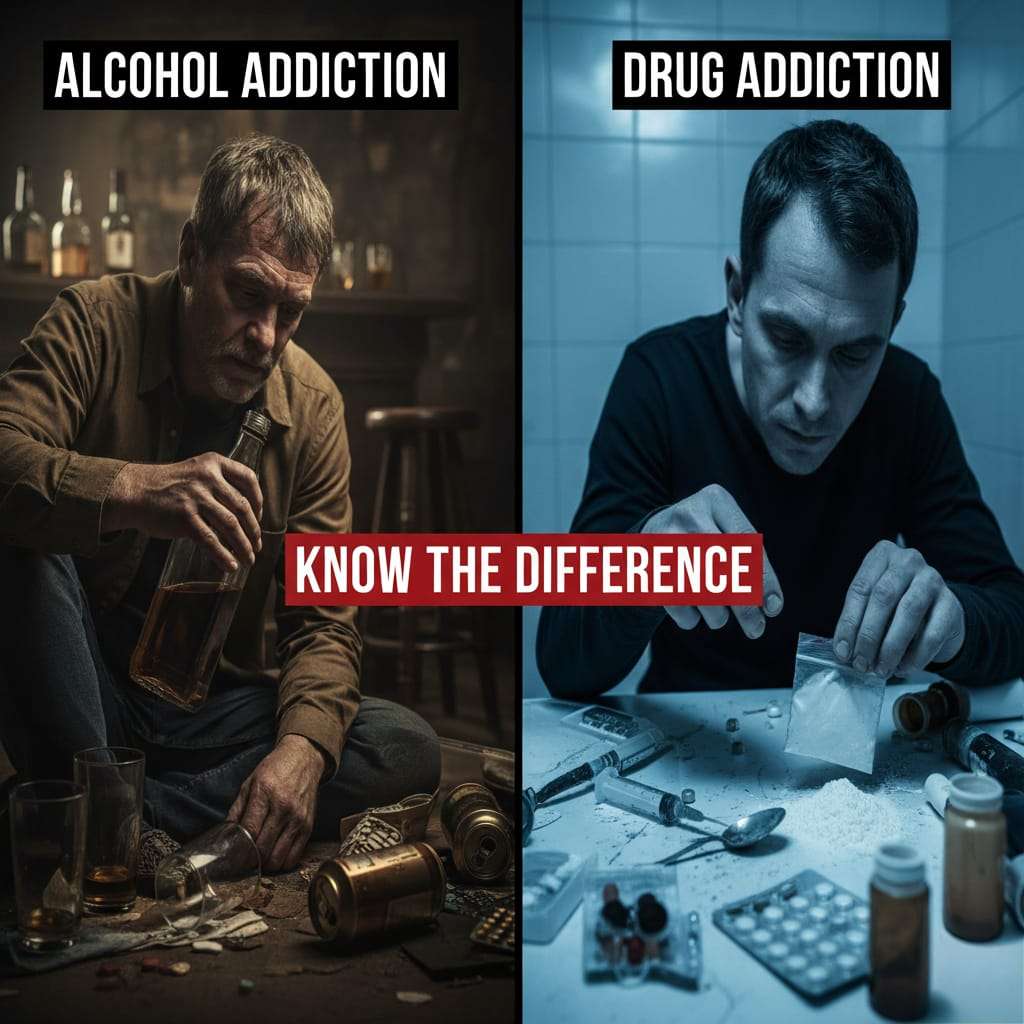
Addiction in any shape can be catastrophic to one’s health, relationships, and overall well-being. But when it comes to alcohol and drug addiction, there are fundamental differences in how each originates, impacts the body, and needs treatment. At Elite Care Rehabilitation Centre, we educate and guide individuals and families about these differences so they can proceed with the right approach towards recovery with clarity and sensitivity.
Understanding Alcohol Addiction
Alcohol dependence, or Alcohol Use Disorder (AUD), is marked by an irresistible craving for alcoholic beverages despite their adverse effects. After some time, one develops tolerance i.e., they must ingest more alcohol to produce the same effect and withdrawal symptoms such as tremors, anxiety, or even convulsions upon cessation of alcohol consumption.
Since alcohol is legal and socially acceptable, it is underestimated by many. Normalization usually puts intervention late and permits dependency to develop undetected. Long-term alcohol consumption can cause liver injury, cardiovascular disease, neurological complications, and an enhanced threat of cancers, making one of the most dangerous but least recognized addictions.
Understanding Drug Addiction
Substance Use Disorder (SUD), or drug addiction, is dependency on drugs other than alcohol opiates, sedatives, stimulants, hallucinogens, or prescription drugs. Drug addiction tends to progress more quickly than alcohol addiction, as some drugs cause severe psychological and physical dependence in a short time.
The consequences of drug addiction vary based on the drug used. For instance, opioid addiction can lead to respiratory depression, stimulant addiction can impact the heart and brain, and injection drug use has the potential to cause infections such as HIV or hepatitis. Drug addiction, unlike alcohol addiction, tends to have legal repercussions and greater social stigma, making help more difficult to access.
Similarities Between Alcohol and Drug Addiction
Both types of addiction have some fundamental features:
1)Loss of control: They are unable to quit despite negative consequences.
2)Cravings and dependence: Both create intense mental and physical cravings to use.
3)Tolerance and withdrawal: The physical body responds by changing, requiring increasingly larger amounts to get the same result.
4)Life interference: Relationships, careers, and health all deteriorate as addiction increases.
5)Treatment need: Recovery necessitates the assistance of professionals detox, counseling, therapy, and continuing aftercare.
Key Distinctions Between Alcohol and Drug Addiction
Although alcohol and drug addictions have similarities in patterns of dependency, their course and effects differ significantly.
1. Legality and Social Acceptance
Drinking alcohol is legal and socially approved in society, and thus it is harder to keep overindulgence disguised as “social drinking.” This tends to postpone awareness and intervention. Drug use, on the other hand, is largely illegal and subject to immediate stigma and possible legal consequences.
2. Rate of Dependence
Addiction to alcohol builds slowly over years, whereas certain drugs produce dependence in weeks or even days following repeated exposure.
3. Physiological Health Hazards
Chronic alcohol consumption harms several organs such as the liver, heart, and brain. Drugs act in various ways based on their category: opioids might slow breathing, stimulants tax the heart, and sedatives slow down vital processes.
4. Withdrawal and Detox
Alcohol withdrawal is dangerous and needs medical care. Drug withdrawal is different for different drugs; some bring about strong psychological cravings, but others result in major physical distress and sickness.
5. Treatment Approach
Alcohol addiction is typically treated with detox, therapy, and drugs like naltrexone or acamprosate. Addiction to drugs can involve medication-based treatments like methadone or buprenorphine for opioids, combined with behavioural therapy and aftercare.
6. Social Impact and Stigma
Since drinking is socially normalized, people may not notice their drinking as problematic. In contrast, drug addicts typically encounter more severe social condemnation and ostracism, which may deter them from seeking treatment.
Why These Differences Matter
Understanding why alcohol and drug addiction are different enables professionals to develop more effective, tailored treatment strategies. Detoxification techniques, the length of therapy, and measures to prevent relapse must be based on each mode of addiction.
At Elite Care, we offer comprehensive, individualized treatment that targets the physical and psychological facets of rehabilitation. Our treatment involves medical detox, counselling, family therapy, skill development sessions, and ongoing aftercare to ensure long-term recovery.
Elite Care’s Commitment to Recovery
We believe that recovery is possible for everyone no matter the substance or severity of addiction. Our experienced medical team and counsellors create a safe, compassionate space for individuals to rediscover balance and rebuild their lives free from dependency.
If you or your loved one is addicted to alcohol or drugs, call Elite Care Rehabilitation Centre. All recoveries start with taking one courageous step and we’re committed to walking it with you.
TLDR;
Drug and alcohol addiction have parallel patterns of compulsion and dependence but vary in terms of speed, impact on health, social acceptability, and treatment requirement. Whereas alcohol addiction is gradual and frequently goes undetected because it is legal, drug addiction is quicker to develop and carries more stigma. Personalized programs at Elite Care Rehabilitation Centre tackle the two conditions with medical, emotional, and ongoing support for sustained change.